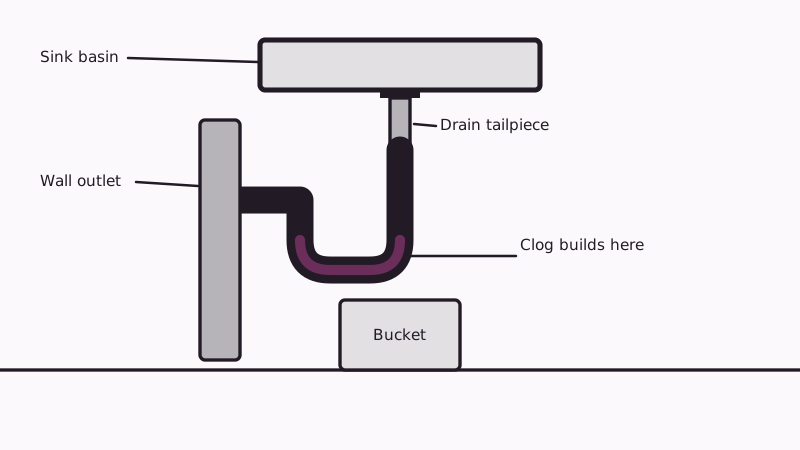
Bathroom drains fill with hair; the kitchen version is another story. Instead, you are dealing with fat that set like candle wax on the pipe wall, plus coffee grounds and rice that stuck to it. The first stretch of pipe below the sink is where it collects, and that stretch is easy to reach. Try the steps below in sequence, skip the chemicals, and if the water still sits there, the Citrus Belt home page explains how booking works, or use the quote form.
The basin is full of water. Where do I begin?
Begin with the hottest tap and a good squirt of detergent, because softened grease sometimes yields without a fight. Still stuck? Fetch a cup plunger. Stuff a damp cloth into the second drain and the overflow slot, let water cover the rim of the cup, then pump firmly about a dozen times.
Prepare the ground. Scoop out food, turn the disposal off, and switch the dishwasher off if it ties into the same line. Once the level falls with a gulp, follow with more hot water so the loosened material travels on.
Reach for a sink plunger, which has a flat rim, rather than the flanged kind meant for toilets. The flange shape cannot seal against a flat basin floor.
What is involved in emptying the trap by hand?
Park a bucket beneath the bent section of pipe. Both large slip nuts should turn by hand; once they do, lower the bend and tip out the sludge. An old spoon scrapes the inside, a rinse finishes it, and a glance into the wall stub shows whether more waits behind. Put it back with the washers seated and the nuts snug. Run water and watch for drips.
A few small tips: wear gloves, lay a towel in the cabinet, and inspect each rubber washer. A flattened one will weep. Should a drip appear after reassembly, give the nut another quarter turn rather than leaning on it. Plastic threads strip when overtightened. If the seep will not stop, see dealing with a leak beneath the sink.
Is baking soda worth a try, and what should I avoid pouring in?
Baking soda chased with vinegar puts on a nice fizz and might lift a thin film, but a true blockage barely notices. Store-bought caustic openers are the bigger worry. Plumbers tend to steer homeowners away from them, because they can eat at old fittings, ruin a disposal's seals and leave a pool of corrosive water if they fail.
Suppose you already poured one in. Treat the standing water as hazardous, with gloves and eye cover, and warn whoever tackles the drain next. Mixing two products is dangerous. Leave the boiling kettle out of it as well when the pipes are plastic or the basin is porcelain, because intense heat can distort joints; the hottest tap setting does the job.
When the complaint is a slow drain instead of a stopped one, why a sink drains slowly sorts causes by symptom.
When does a drain snake come into play?
After the trap is clear and water still lingers, a hand-cranked auger can reach beyond the wall. Push the cable in until it resists, turn the handle to snag or shred the plug, withdraw it and wipe the cable down. Finish with a long run of hot water.
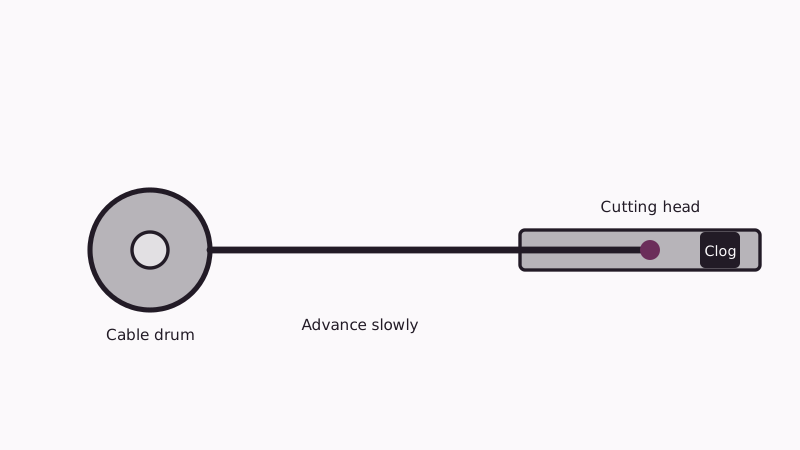
For a kitchen, a quarter-inch cable around 25 feet long is enough. Anything stiffer risks scratching the sink or catching in a bend. Advance slowly. A cable that refuses to go farther may be meeting a fitting or a weakened pipe, and brute force can punch through old metal.
If the sink empties but clogs again within days, the obstruction is deeper or the whole line is coated in grease. That scenario justifies a powered machine and a camera.
What if the washer, the dishwasher or the disposal shares the drain?
Many kitchens join several appliances to one waste line. Gurgling whenever the dishwasher cycles, or washer water surfacing in the basin, tells you the blockage lies past the point where lines merge, beyond the trap you just cleaned. Also rule out the disposal itself, since a seized one imitates a clog.
A seized disposal first needs its power removed, either by unplugging it or by switching off its breaker. A hex wrench fits a socket beneath the unit; work it side to side until the blades turn freely, then push the red reset on the base. Fingers never go into the chamber. If the unit keeps failing, see garbage disposal installation.
A tangle of hair in a kitchen trap suggests the line also serves a bathroom. Then the guidance for a bathroom sink clog applies as well.
When is professional help the better choice?
It becomes the better route when several fixtures are slow, sewage odor drifts up, water reappears in the sink from a different drain, or the clog returns soon after you cleared it. Each suggests a branch or main line beyond hand-tool range, where a cable machine and a camera are needed.
Older Anaheim, Fullerton and Orange homes frequently have cast iron, clay or galvanized waste lines. Decades of use leave rough pipe walls that grab grease, and roots can intrude on clay. Hard local water adds scale to the mix. Someone with a cable machine can open the line, film its condition and tell you whether replacement belongs in the plans.
General pricing for drain work and other jobs is on the plumber cost page, and the person who comes out gives a written figure after seeing the problem.
Common questions
Why does the same sink keep clogging?
Fat is the usual repeat offender. It cools on the pipe wall, and each bit of food adds to the layer. Scrape plates into the trash, give greasy pans a paper-towel wipe before the tap and put a basket strainer in the drain. If monthly clogs continue regardless, have the slope and condition of the line checked.
Can I plunge when a disposal is installed?
You can. Keep the disposal switched off while you work, seal the dishwasher branch if there is one, and keep hands clear of the unit. If your plunging sends food bits up through the disposal opening, the blockage most likely lies beyond the disposal rather than inside it.
Does leaving a clog alone cause harm?
Standing water is not harmful to pipe in itself, but a blocked line can overflow the moment the dishwasher or washer discharges. Harm comes mostly from rough fixes: strong chemicals, boiling water on plastic and over-forceful tools. If your first couple of steps fail, stop there.
How much of an afternoon does this take?
A plunger session or a trap cleaning commonly wraps up inside half an hour including mopping. A snake adds some time. After an hour with no progress, the blockage probably sits beyond what household tools reach, so continuing risks damage.
Sources
- Published plumbing guidance on kitchen sink clogs, plungers and P-trap cleaning, checked November 2026
Last updated