In Anaheim CA, a plumber company is the business you call when water, drains or gas piping stop behaving: a leak behind the vanity, a heater gone cold, a toilet that never stops running. Someone local visits your address, and the figures reach you on paper beforehand. Begin on the home page or fill in the quote form. Read on for what the trade covers, how to pick a company without regret, and what a typical invoice looks like in North Orange County.
What does a plumber company actually do?
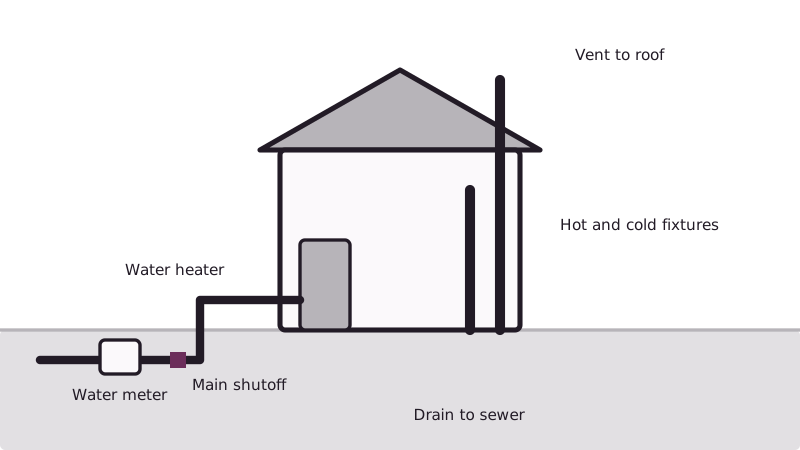
Plumbers work on three networks inside a building: the supply lines that deliver pressurized water, the drain and vent system that removes it, and gas lines running to the stove, dryer and heater. Day to day that spans a swapped faucet cartridge up to a whole-house repipe. Every visit leans on the same kit: valves, fittings, a torch or crimp tool and test equipment.
The calls we hear about most, and the page that covers each:
- Leaks and bursts. Locate the source, isolate it, cut out the bad section. See burst pipe plumber.
- Water heaters. Repairs, tank replacements and tankless conversions. See water heater repair and replacement.
- Toilets and fixtures. Flush valves, supply lines, wobbly bases, new faucets. See toilet repair.
- Pressure. A clogged aerator is the cheap cause; a worn regulator is the common one. See low water pressure.
- Gas piping. New stubs for appliances, plus leak repair. See gas line work.
- Repiping. New supply lines through the whole structure. See repiping a house.
Housing age shapes the mix. Pre-war bungalows around central Anaheim, Fullerton and Old Towne Orange have galvanized or early copper supply pipe that corrodes from the inside, so repeat leaks and weak flow show up there more than in a 1990s subdivision.
What are the main types of plumbing services?
Five types cover almost everything: repair, replacement, new installation, inspection and urgent response. A repair swaps one worn part, say a flapper. Replacement retires a whole fixture or appliance. New installation adds something the house never had, like a gas stub for an outdoor grill. Inspection diagnoses by camera or pressure test, and urgent response is for floods and gas odors.
The other split is by building. Residential plumbing means houses, condos and duplexes. Commercial plumbing covers restaurants, offices and retail, where backflow assemblies and grease interceptors enter the picture. A few jobs call for a narrower specialty: camera work in a buried drain, gas fitting, backflow testing or finding a slab leak.
Whichever bucket your problem lands in, describe what you notice on the quote form: where the water shows up, what you hear, what you smell. With those details the right parts ride along on the first trip.
What will a plumber charge for a typical Anaheim visit?
Published price guides show plumber labor between about $75 and $200 an hour, and Southern California shops tend to sit in the upper half. Many shops add a trip charge, listed at $75 to $200 in published guides and sometimes credited against the repair. These are guide figures only; whoever visits your house sets the actual price.
Pricing comes in two shapes. Small tasks, such as a faucet swap or a new fill valve, often get a flat price. Bigger or murkier work runs on time and materials with an estimate. Find out which style applies before agreeing.
Four things push an invoice up or down:
- Access. Crawl spaces, finished walls and upstairs runs eat hours.
- Parts. A fill valve is a few dollars. A tankless heater or pressure-reducing valve is not.
- Permits. Replacing a heater or modifying gas pipe typically brings a permit, issued through your city's building division.
- Timing. After-hours calls cost extra.
Job-by-job ranges live in the plumber cost guide, so this page can stay on choosing.
How do I vet a plumber before letting them in the door?
Start with the license, then compare paper. California expects a contractor license for any job where labor and parts together reach four figures, $1,000 or more. The state agency that oversees contractors, called CSLB (Contractors State License Board), runs a free license search online. Write down the number, confirm it is active under a plumbing classification, and get price, scope and payment terms on paper before anyone touches a pipe.
A short vetting list:
- Look up the license number at CSLB. Active status and a plumbing classification are what you want to see.
- Ask who pulls the permit. Get the answer written into the contract.
- Insist on a contract for anything over $500. The work, materials and payment schedule go in it.
- Mind the deposit. State rules cap a home improvement down payment: $1,000 or ten percent, whichever number is lower.
- Line up scope against scope. Beware a bargain that never mentions the permit or a shutoff valve.
- Ask about surprises. Any extra work should arrive as a written change order both sides sign.
Sending a request through the quote page puts a local plumber on your address and gets the figures to you in writing. Each step is described on what happens next.
Which plumber should I phone in an emergency?
Pick whoever can physically reach you today, names a price before starting and holds the right contractor license. While you wait, close the main shutoff for a water emergency. For a gas odor, walk outside first, and report it to SoCalGas. The utility staffs 1-800-427-2200 around the clock. If a person is hurt or in danger, 911 is the first call. Never make that call from inside a house that smells of gas.
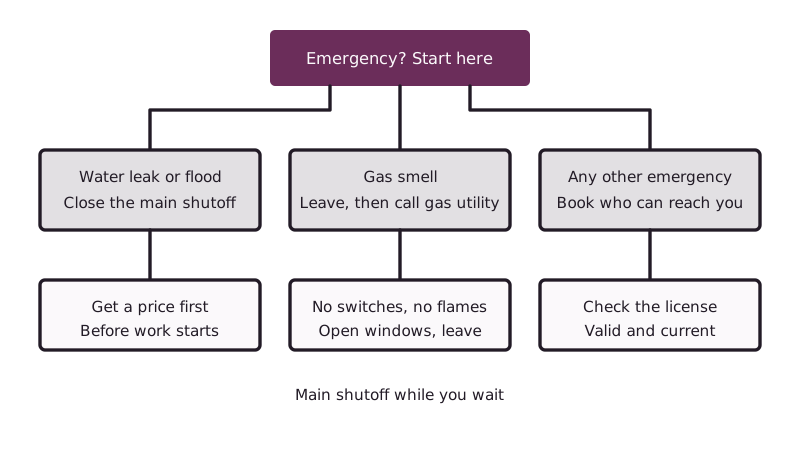
We take requests weekdays, 9am to 5pm, and we make no promise about how quickly anyone arrives. If a pipe is gushing at night, stop the water yourself and ring a plumber who advertises around-the-clock service. The first moves are laid out on the emergency plumbing page.
Your first ten minutes with a leak:
- Find the main shutoff, usually by the meter or where the pipe comes up through the foundation, and turn it clockwise.
- Open a ground-floor faucet to bleed off what is left in the pipes.
- Kill power to any room where water is close to outlets.
- Photograph everything before you mop, because your insurer will ask.
What about plumbing for a backyard unit or a manufactured home?
Usually, with different questions for each. An accessory dwelling unit (ADU) needs its own supply, drain and vent runs tied into the main house or the street, which normally means a permit and city inspections. Mobile and manufactured homes use their own piping, often flexible PEX or older polybutylene, with drain layouts unlike a stick-built house, so ask whether the plumber has worked on them.
For an ADU, settle three things early: whether the unit gets a separate water meter, where the sewer lateral connects, and whether the heater will be gas or electric. Those choices swing the budget more than the fixtures do. For a mobile home, put the age and the pipe material in your request so the right adapters and shutoffs arrive with the truck.
Common questions
Is a very low quote a warning sign?
Sometimes. Line items tell the story. A fair quote separates labor, materials, permit fees and haul-away, and states the scope in plain words. Gather two or three for anything sizeable. When one number lands far below its rivals, ask what is missing from it. California treats a home improvement contract over $500 as something that must be written, with the contractor's license number on it.
What if I cannot pay for a plumber right now?
Contain the damage first by closing the little stop valve beneath the fixture, or the main shutoff. Then ask whether the work can be split: stop the leak today, replace the fixture next month. Read your homeowner policy for sudden-damage coverage, and ask your water utility about hardship programs. Skip the drain chemicals and never improvise on gas piping to save money.
What do professionals use in place of Drano?
Hardware rather than chemistry: a plunger, a hand auger, a motorized drain machine, and for stubborn lines a camera paired with a water jet. Chemical openers eat at old metal pipe and burn the next person to open that drain. If a plunger fails, a call to a plumber beats pouring in a second bottle.
Do plumbers fix broken water pipes?
They do. The usual move is to cut away the damaged length and splice in copper, PEX or another approved material. A pipe repair clamp may seal a pinhole for a spell, but it buys time rather than a cure. When the line is old and keeps failing, expect a suggestion to replace the run or the whole network.
Does a bigger company beat a one-person shop?
Not automatically. Look for a current license, a written quote and a plumber who has done your type of job. Larger firms often field more trucks and take on repipes or heater swaps. Smaller shops may suit a quick repair. Compare scope and price line by line rather than headcount.
Sources
- CSLB, Learn About Home Improvement Contracts
- CSLB, Hire a Contractor
- SoCalGas, natural gas leaks
- Published hourly-rate and service-call guides from plumbing businesses and cost sites, checked November 2026
Last updated