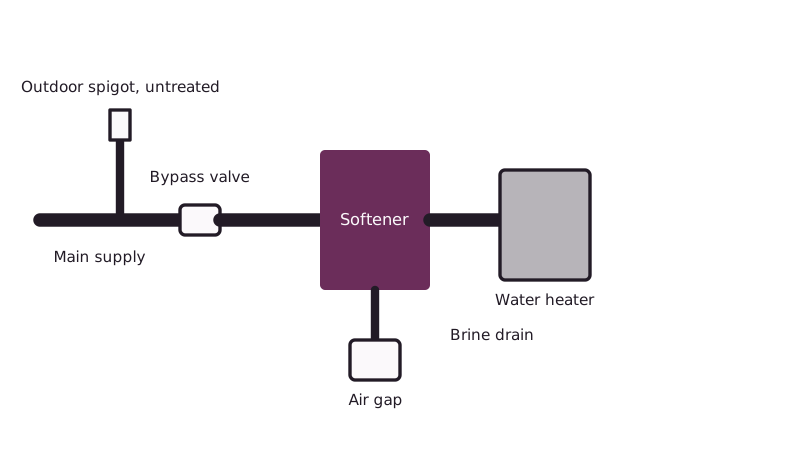
Inside a softener, a bed of resin beads grabs calcium and magnesium out of the water and trades them for sodium or potassium, which stops scale before it forms. Putting one in means splicing it into the main supply, giving its rinse cycle a drain and giving it power. A local plumber visits your address, and the written price arrives ahead of any work. Use the quote form to ask, or head back to the home page.
Is Anaheim water really hard enough to need one?
For most households, yes. The city's own page puts hardness near 300 ppm, roughly 18 grains per gallon, and its 2025 report shows a spread from 8 to 25 grains over the year. Hardness above about 10 grains tends to leave visible crust. The utility blends local wells with imported supply, which is why the number drifts with season and street.
Here is what that mineral load does inside a house:
- Water heaters. Scale coats the burner or element and settles as sediment, so the tank works harder and wears out sooner.
- Fixtures. White crust clogs showerheads and aerators, which is a common source of weak flow.
- Appliances. Dishwashers and washing machines collect scale on heating parts.
- Glass and tile. Spots that never wipe off cleanly.
Fullerton, Orange, Brea and other neighboring cities publish their own water quality reports, so check yours for the hardness figure. Pre-1960 houses with galvanized pipe suffer most, because scale narrows the bore year after year. Our page on preventing hard water scale covers what to do besides a softener.
Should a plumber handle the installation?
Usually. The softener taps the main line, wants a drain with an air gap, an outlet close by and a bypass so the house keeps water during service. Experienced owners with a torch do install them, yet a slip means a flood or scale creeping back into the heater. Where contractor or permit rules apply, the plumber also deals with that paperwork.
Once labor and parts reach $1,000, a California contractor license enters the picture, which covers most company-priced installs. Whether a softener swap needs a city permit depends on the city, so ask the Building Division of your city. A plumber's quote should say who handles it.
Reasons to hire out rather than do it yourself:
- Cutting into copper or galvanized main lines in a tight garage wall.
- Adding a proper drain with an air gap to a standpipe or laundry sink.
- Finding the right tie-in point ahead of the water heater.
- Avoiding a leak you will not notice for weeks.
What happens during a softener install?
A plumber shuts off the main, cuts the line near where it enters the house, and fits the softener's inlet and outlet with a bypass valve. Next comes the brine drain line with an air gap, then power, then salt, then programming the control head to your hardness. The unit is flushed and checked for leaks before the water goes back on.
Where the unit goes matters:
- Near the main, ahead of the water heater. Soft water has to reach the heater to protect it.
- Often upstream of the outdoor spigots. Some owners prefer irrigation and hose lines to stay on untreated water, because lawns gain nothing from softened supply, so the tie-in sits after that branch.
- Level ground with room for salt. A garage wall is the classic spot in Anaheim homes.
- Away from freezing. Mild winters here make this less of a worry than elsewhere.
Manufacturer manuals set the exact steps. The Rheem softener manual, for instance, calls for at least 3 gallons per minute at the inlet. Brand-specific instructions for Culligan, Kinetico, Whirlpool, Aquasana, Fleck or Rheem units come in the box, and a plumber follows them. The process is broken down further in softener installation, step by step.
What does a softener install run in the Anaheim area?
Published guides put a complete whole-house softener, unit plus installation, between roughly $800 and $3,000, with many around $1,500. The plumber's share alone commonly runs $150 to $1,000, with $500 to $700 a frequent figure for homeowners. A hookup to a loop that is already there lands at the low end; fresh supply lines, a new drain or cramped access push the price up.
Sources disagree widely, so read them as ballpark numbers and hold out for the written quote. What moves the total:
- Tank size. A larger grain capacity costs more.
- Valve and drain work. A bypass and a proper brine line add parts and time.
- Access. A cramped crawl space or finished wall adds labor.
- Extras. A carbon filter, a sediment filter or a loop already in place change the total.
For line items, read the water softener installation cost guide. Ask whether the quote includes hauling away an old unit, because some do and some charge extra.
How big a softener does a 2,000 sq ft house need?
Floor area does not set the size; people and hardness do. A common rule multiplies household size by 75 gallons a day by your grains of hardness, then by seven days between regenerations. For four people at Anaheim's 18 grains, that is about 38,000 grains a week, so installers usually quote a 48,000-grain unit.
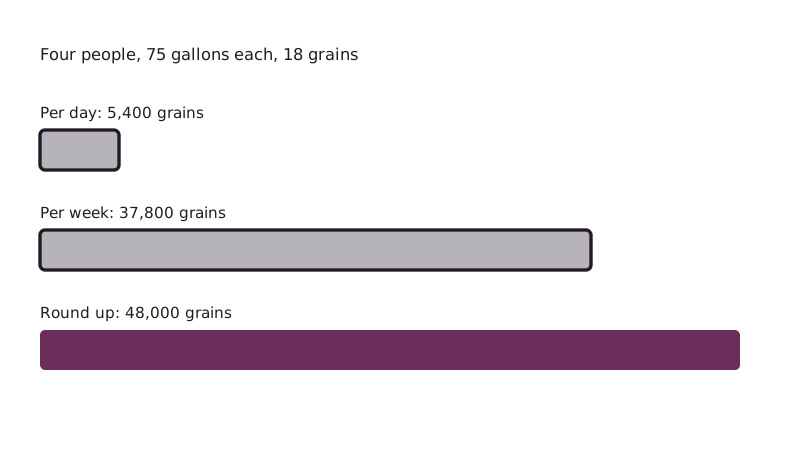
The math: 4 people x 75 gallons x 18 grains = 5,400 grains a day. Over seven days that is 37,800. Round up and leave a margin and you land on 48,000. A smaller unit regenerates more often and wastes salt and water. A larger one is fine if the household grows.
Test your own water before you buy, because the 18-grain figure is a city-wide figure and not a reading at your tap. Home test strips or the utility's report give you a starting point.
What is a softener loop, and what about shower head softeners?
The loop is a set of capped or valved fittings put in during construction so a softener can be added later without cutting pipe. Where a house has one, hookup goes fast and costs less. A shower head cartridge is another animal: it may cut chlorine, but it does not strip hardness the way a resin tank does.
Check with the installer on whether your garage or utility closet already holds a loop. Without one, the installer can build a loop as part of the job, which also makes later servicing easier.
Common questions
Does a water softener help with mold?
No. Mold grows where moisture and organic material sit, not because of hard water. Softened water may help soap rinse off and reduce scale in showers, which can make cleaning easier, but it is not a mold treatment. Fix leaks, run bathroom fans and clean affected surfaces. For a serious mold problem, talk to a mold professional.
Can I deduct a water softener on my taxes?
Generally a softener installed for comfort is a home improvement that adds to your home's cost basis rather than a deduction. A medical need documented by a doctor may be treated differently. Rules change, so ask a tax professional before you count on one. We cannot give tax advice.
Are salt-based softeners restricted in Orange County?
California has no statewide ban. State law lets local sewer agencies restrict self-regenerating softeners that send salt to the sewer, and a few areas, such as the Santa Clarita Valley, do. We did not find a rule for our area, but confirm with your city or sewer agency before you buy, and ask about salt-free options if you are unsure.
Will a softener push my water bill up?
Each regeneration cycle uses some water, a modest amount on a properly set unit. A stuck valve that drains nonstop or a badly programmed head wastes more. Check the meter if your bill jumps, and see softeners and high water bills for a quick test.
How long will the visit last?
Published guides mention two to four hours when the plumbing is accessible. A brand-new brine drain, a crawl space or soldering inside a finished wall stretches that. Water goes off during the swap, so choose a time that avoids laundry day.
More in this guide
- Water softeners
A working water softener adds only a little to a water bill.
- Water softeners
What causes hard water scale, how hardness is measured in grains per gallon and ppm, and what really prevents buildup in Anaheim homes:…
- Water softeners and treatment
Step-by-step water softener installation for Anaheim homes: sizing for 16-19 grain water, bypass, drain air gap, permits, and the point…
- Softener installation cost
What a water softener costs to install in Anaheim in 2026: unit and labor ranges, what sizing means for a 2,000 sq ft house, brand quotes…
Sources
- City of Anaheim, water hardness (about 300 ppm, about 18 grains per gallon)
- Anaheim Public Utilities, 2025 Water Quality Report
- Los Angeles County Sanitation Districts, automatic water softeners in the Santa Clarita Valley
- Rheem Water Treatment, softener installation and operation manual
- Published installed-price guides for whole-house softeners, checked November 2026
Last updated