Softeners do use water. Each cleaning cycle, called regeneration, flushes salty brine through the resin and rinses it out the drain, and most published figures put that at a few dozen gallons per cycle. Spread across a month, that is pocket change. If the bill leaps, the softener can be to blame, though a jammed valve or a leak somewhere else turns out to be the explanation more often. Still choosing a unit? Our water softener installation page starts that conversation.
What is the everyday water cost of a working softener?
Published numbers differ, but most land between about 20 and 70 gallons for each regeneration, with efficient units near the bottom. One cycle a week therefore adds little to a monthly bill. Those figures originate with makers and dealers, so use them loosely and read the manual for your own model.
Three settings control the total:
- Hardness setting. If it is programmed too high, the unit regenerates more often than needed.
- Size. An oversized resin tank wastes water on every cycle.
- Timer versus demand. A clock-based schedule regenerates whether or not the resin is used up; a demand-initiated control waits until it is.
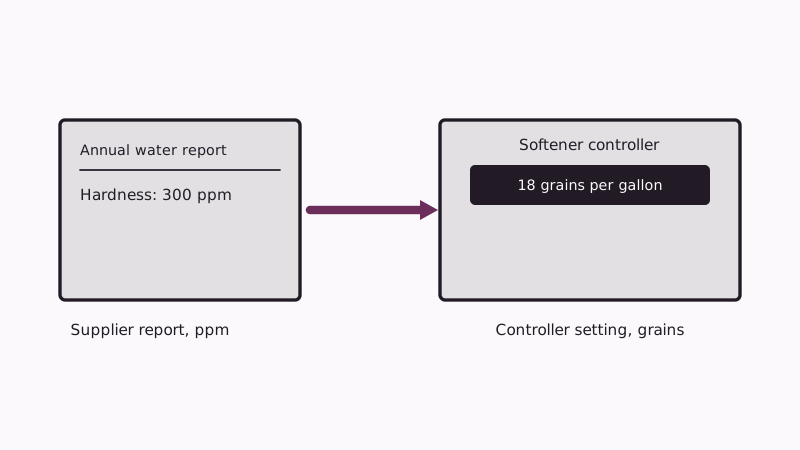
Anaheim's own water-hardness page lists roughly 300 ppm, about 18 grains per gallon, which is hard by any standard. A softener in that water will work hard, and regenerate fairly often, but a correct setup keeps the extra use small.
What would make a softener drive the bill up?
A valve jammed in backwash or brine-draw position keeps water flowing to the drain around the clock, and published accounts of failed units describe thousands of gallons vanishing monthly. A broken timer, a bad control head, or a bypass left half open can do the same. A steady running sound near the drain is the giveaway.
Listen at the unit when the house is quiet. Water trickling in the drain hose, a brine tank that keeps overflowing, or a regeneration that never seems to end are signals to act. Turn the softener to bypass if you suspect it, then check the meter. If the bill stays high after that, the cause lies elsewhere.
Softener or leak: which one is it?
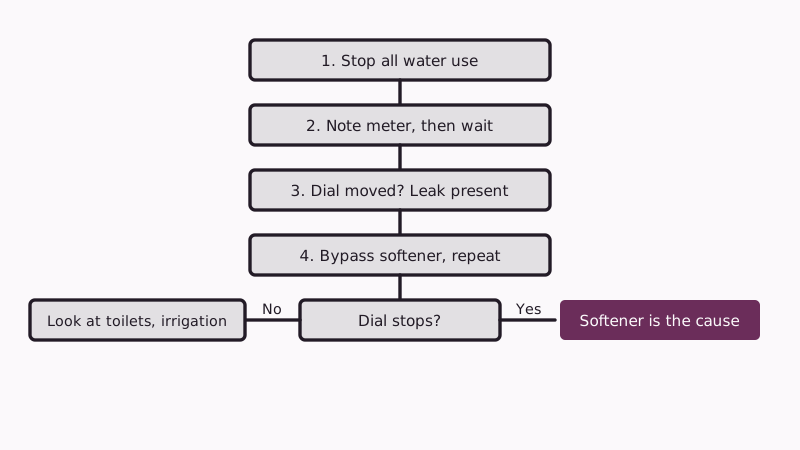
Lean on the meter. Stop all use, note the dial, give it two hours and look again, the way the EPA describes the check. A moving dial signals a leak or a fixture that will not shut off. Now switch the softener to bypass and run the same test. If the dial stops, the softener was the cause; if not, look at toilets, irrigation and buried lines.
It also helps to compare bills. Look at the usage figure, not just the dollar amount, because rates change. A jump that started the month the softener went in suggests a setup issue. One that began months later points to a fault or a different leak.
The other usual suspects, from toilet flappers to sprinkler timers, are covered in why a water bill climbs.
Can the wrong setup cause trouble besides the bill?
Yes. If the unit is undersized for the household, hard water slips through and scale builds up in the heater and fixtures. If salt runs out, the resin stops softening. A drain line connected carelessly can also cause trouble, so a proper installation with the right drain connection matters.
Installation questions are covered in the water softener installation cost and how a softener gets installed pages. In hard-water cities, scale is the problem a softener solves; our guide on preventing hard water scale discusses other measures, such as flushing the water heater.
Because softeners tie into the supply and drain lines, a plumber does the connections. Bigger alterations may need a city permit, which the local Building Division can confirm before work starts.
Where do I find the hardness number the controller needs?
Your water supplier publishes it. Anaheim's page lists about 300 ppm, and since one grain per gallon equals roughly 17 ppm, that works out near 18 grains, which is the unit most controllers ask for. Hardness shifts through the year as groundwater and imported supplies mix, so a setting based on one lab sheet can drift.
Cheap strips sold with pool or aquarium supplies give a rough cross-check. A plumber can enter the right figure in a minute, and correct tuning often trims the cycles without costing comfort.
Bill jumped: what do I do first?
Hunt for leaks before pointing at an appliance. Run a meter test with the softener in bypass, compare the controller's hardness number to the supplier's report, and watch the drain hose for constant flow. If the softener is the offender, a plumber can service or replace its control head. If not, the real leak is worth finding quickly.
Write down the model number and keep the manual handy, since the plumber will use both. To get a plumber looking at it, send a note through the quote form; the full range of plumbing we line up is on the home page.
Common questions
Is some waste unavoidable?
Every cleaning cycle sends a little water down the drain, and efficient or demand-based models send less. Set against the benefit, which is softer water that is kinder to heaters and fixtures, the loss is modest. A unit that drains without a pause has malfunctioned; that is not normal behavior.
How often is too often?
It hinges on hardness, household size and tank capacity. Demand-based units commonly cycle every few days, whereas timer models follow a schedule, often weekly. A small household whose unit cleans itself daily should have a plumber verify the hardness setting and the tank size.
Will bypassing the softener lower my bill?
Only if the softener is wasting water. Bypassing stops its regeneration, which can confirm the diagnosis, but it also lets hard water through. Use bypass as a test, not as a permanent fix, unless you decide to remove the unit.
Is a salt-based softener allowed in Orange County?
We could not confirm a countywide ban, and some California cities and districts do limit certain softeners. Check with your water supplier and city before buying or replacing a unit, so you know about any local rules on brine discharge.
Sources
- Published regeneration water-use figures from several softener makers and dealers, checked November 2026
- EPA WaterSense, Fix a Leak Week
- City of Anaheim, Water Hardness
Last updated