A water bill climbs for three main reasons: water is escaping somewhere, you are using more than you realize (usually outdoors), or the bill covers more days or a different rate than last time. Leaks are the one you can fix, and the quickest check is the meter. Work through the tests below before booking anything, and when a leak is confirmed, our home page shows how to request a plumber.
What are the usual causes of a sudden jump in the bill?
In rough order of frequency: a running toilet, a leaking irrigation line or valve, a dripping faucet, a hidden pipe leak, a pool or fountain that auto-fills, and a longer billing cycle. Extra guests, new equipment such as a washer or water softener, and a rate change can also lift a single month.
Toilets top the list because a worn flapper can leak silently for weeks, and a cheap part causes a large bill. Hidden leaks come next. Then check whether the dates printed on the bill cover thirty days or thirty-five.
Is there a quick way to prove a leak exists?
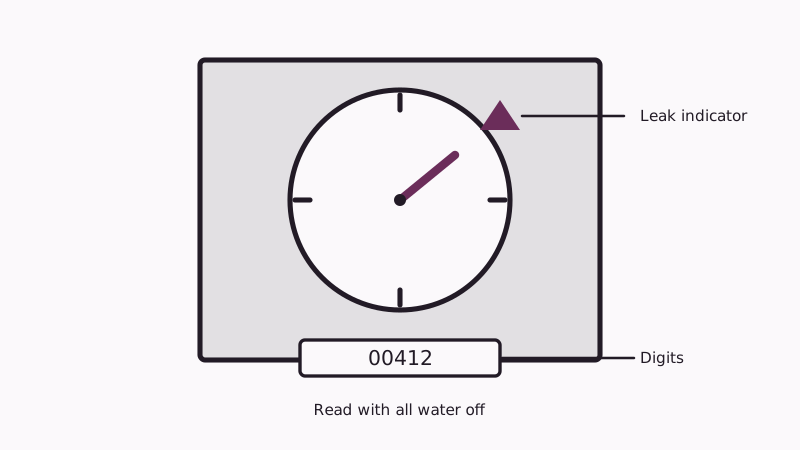
Read the meter. With every tap and appliance idle, jot the digits down and come back after a dry two hours. EPA's rule is blunt: any change means you probably have a leak. Some meters carry a tiny dial or triangle that turns with the slightest flow, which is quicker to watch than the digits.
If the reading holds still, the extra use is something you control. If it does move, close the valve at the foundation wall and compare once more. A dial that halts places the leak indoors; a dial that keeps turning places it on the buried pipe running from the meter.
Is the toilet the culprit?
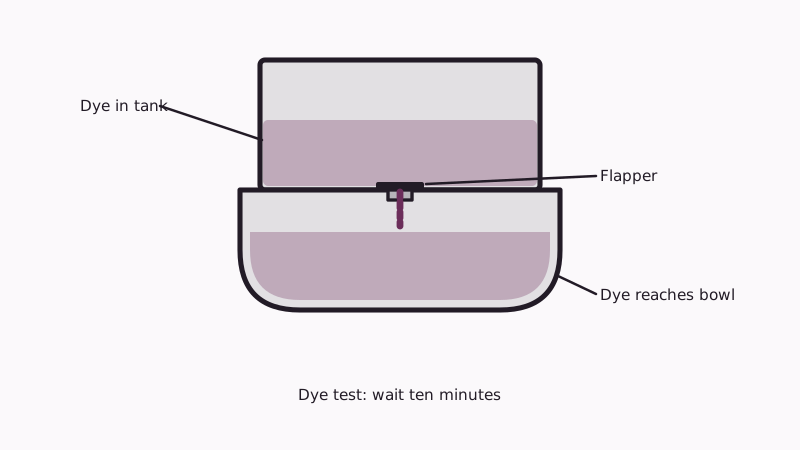
Often. Put a little dye in the tank water and leave it ten minutes unflushed. If the bowl has picked up the color, the toilet leaks, as EPA describes it; flush when you finish, since dye can mark the porcelain. A worn flapper that has stopped sealing is the common reason, and swapping it is an easy fix.
Our guide on fixing a toilet flapper shows how to swap one. When the tank refills by itselfwith no hand on the handle, that is covered under a running toilet.
Why is the bill higher in winter, or in a particular season?
Because use rarely falls the way people expect. A bill that rises in winter, when lawns need the least, points to a leak or to an irrigation controller still running an old schedule. EPA offers a benchmark from a cold month, January or February: four people using over 12,000 gallons there may have serious leaks.
One cracked sprinkler head or a stuck zone valve can run in a back bed for weeks without anyone noticing. Walk the yard after the watering time and look for soggy ground, pooling near the foundation, or a sprinkler zone that never shuts off. Switch the controller to manual and read the meter again.
What if the bill is large but the meter test says no leak?
Then count the real usage. Showers, laundry, a new baby, guests, a pool refill, or a switch to a bigger washer all add up. Count fixtures and appliances that run daily and compare against last year's same month. If one outdoor zone or a new lawn started up, that explains a rise on its own.
Compare your bill against a prior one on the utility's account page. Pay attention to the billing dates, any rate or tier changes, and whether a reading was estimated instead of read. A utility's customer service line can recheck a meter and explain a charge.
Where do I take a disputed bill if I live in Anaheim?
For water billed by the city, Anaheim Public Utilities is the office to ask. Its customer service line is (714) 765-3300 as listed by the city, and an account portal is available online. Ask for a meter recheck and what it offers for a leak that was repaired. Other cities in North Orange County, such as Fullerton, Orange and Brea, run their own water departments.
Searches that name other utilities, in other states or countries, point to the same advice: read the meter, test the toilet, then ask your own utility about its dispute process. We cannot see your account, and we do not speak for the utility.
How do the sounds in the pipes connect to a bill?
A thump as a faucet shuts is water hammer, the shock of moving water halting suddenly, and it points to pressure or a worn air chamber instead of a leak. The sound to worry about is a hiss or rush after dark while nothing is running, which can mean a pipe is leaking inside the wall or slab.
If a pipe has actually burst, you will hear a rush or spray, then see water on a floor or ceiling. Turn the main off immediately, then see the burst pipe overview. Knocking noises get their own explanation under the water hammer sound.
Could my water softener or pressure be adding to the bill?
Yes, in a few ways. A softener that regenerates too often burns extra water, and strong street pressure makes every fixture and every leak flow harder. A failed pressure regulator can force far more water through a leak than it should. Our pages on whether a water softener raises the bill and water pressure that is too high or low explain the checks.
When the usage is steady but the figure still looks wrong, choose a calm moment and do the meter test again, because a single reading is easy to misread.
Common questions
What does an ordinary household leak add up to?
EPA puts household leakage at more than 9,300 gallons per year. A running toilet can waste far more than a dripping faucet does. Even a few drops a second add up across a two-month cycle, which is why a bill can jump with nothing visibly wrong.
Does a bill vary from one month to the next?
Yes, within limits. Weather, irrigation, visitors and the number of days in the cycle all shift it. A rise of a few dollars means little. A doubling, with no new use you can name, deserves the meter test above, and a closer look at your valve and toilet before the next bill arrives.
Will a plumber find a leak I cannot see?
Frequently. Before any wall is opened, plumbers trace hidden leaks with acoustic listening gear and pressure checks. Prices and methods are laid out under leak detection costs, and our quote form is where a visit begins. Most hidden leaks sit in a wall, a slab or the buried line, so the plumber confirms the location before cutting anything, then quotes the repair.
Should I contest the bill before repairing the leak?
Call the utility first and explain that you are testing for a leak. Once it is fixed, keep the receipt and ask whether the charge can be adjusted, because some utilities offer that and some do not. Never simply stop paying without talking to them.
Sources
Last updated