Begin with reach: how many outlets feel weak? A single trickling tap usually has a gummed-up aerator or cartridge. If only the hot side lags, blame the water heater circuit. When everything is feeble together, suspect a valve, the regulator, a concealed leak, rusted pipe or the supply itself. The low water pressure plumber page covers hands-on help; this guide helps you sort the cause before anyone is called.
How widespread is the weakness in your house?
Run a bathroom sink, a kitchen tap and the outdoor hose bib. Weakness at one outlet alone means the trouble sits at that fixture. Hot weak with cold strong shifts attention toward the heater. All outlets weak implies a cause upstream of every branch, such as the main valve, regulator or meter-side pipe.
| Pattern | Look first at |
|---|---|
| One tap or showerhead | Aerator, showerhead, cartridge, supply hose |
| Hot only | Heater valves, sediment, hot-side pipe |
| One bathroom | Stop valve or the branch line |
| Entire house, constant | Main valve, regulator, pipe, meter side |
| Entire house, only at certain hours | Neighborhood demand or the supplier |
Five minutes with this grid saves an hour of fiddling with the wrong part.
What starves a single faucet or showerhead?
Mineral scale is the first suspect in hard-water country. Twist off the aerator or showerhead and check for pale crust plugging the holes; soak the piece in vinegar, brush it clean and screw it back. A flow that stays thin afterwards implicates the cartridge, or an under-sink stop valve opened just a crack.
Anaheim reports hardness near 18 grains per gallon, enough to coat small openings fast, which makes scale the cheapest thing to eliminate across North Orange County. Padre Dam, a California water district, names deposits in faucets, showerheads, hoses and filters as a leading cause of weak flow at one outlet.
What drains pressure from every fixture at once?
Five candidates dominate: a shutoff at the house or meter that is not wide open, a regulator that has drifted or failed, a leak upstream of your taps, galvanized pipe choked with rust, and something on the supplier's side. Inspect valves first because that costs nothing, then move on to the regulator and the pipe material.
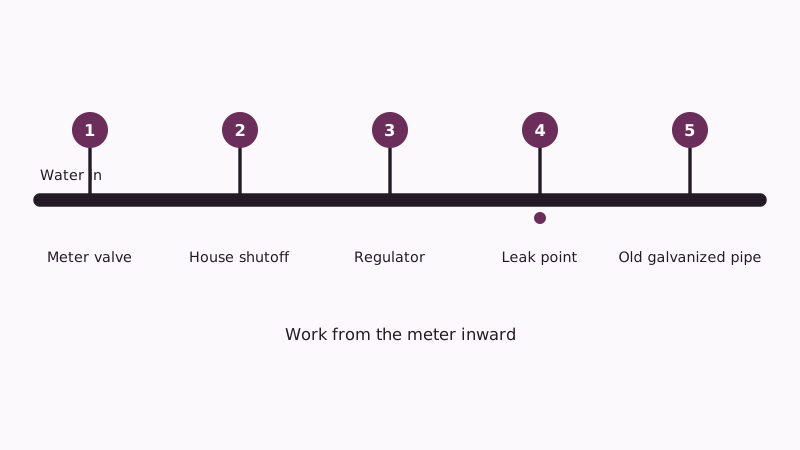
- Valves. Both the house shutoff and the one at the meter should be turned all the way open. Previous plumbing work sometimes leaves one half-shut.
- Regulator. The bell-shaped brass device mounted near the point of entry can fail low as readily as high.
- Leaks. Water lost before it reaches the taps drags pressure down. EPA's two-hour meter check, noting the dial before and after with nothing running, reveals it.
- Corroded pipe. Galvanized steel rusts shut from within, so pressure in older houses sags gradually for years. See replacing galvanized pipe.
- Softeners. Padre Dam lists a shuttle valve left in the wrong position after a cylinder swap.
Regulator tuning is explained at adjusting the valve.
Why would the hot side alone be feeble?
With cold strong and hot weak, the choke point lives somewhere in the heater or its hot-water piping. Tank sediment, a heater valve only partly open, a clogged mixing valve or a corroded stretch of hot-side pipe can each throttle flow, while the cold lines carry on normally.
Hard water makes scale in heaters and shower valves a frequent finding in this area. A tank that also rumbles, or empties too soon, may need flushing or replacing. The guide to weak hot flow goes further, and the no hot water page handles the reverse problem.
Might the neighborhood, a hillside or the HOA be responsible?
They can. Padre Dam observes that altitude, distance from the storage reservoir, nearby construction or firefighting, hour of day and outages can all shift pressure at your tap. Hillside homes, as in parts of Anaheim Hills or Yorba Linda, may see less than houses down on the flats.
A dip that repeats every evening points toward street-wide demand; chat with a neighbor. In an HOA with shared plumbing the association may own the main, so confirm before paying for work on your side. Trouble beyond the meter generally falls to the owner, and a plumber can say which side holds the fault. To line up that visit, use our quote page.
What is the pressure, measured rather than guessed?
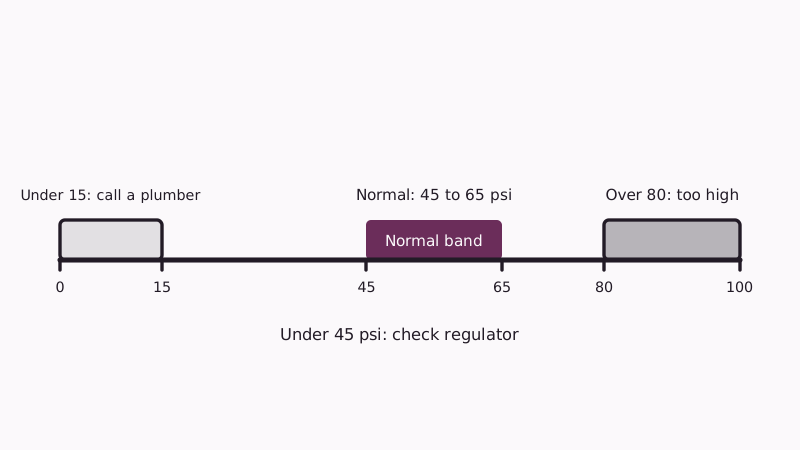
Screw a gauge onto the outdoor spigot or the washer tap, shut off all other water use and read the dial. Padre Dam gives 45 to 65 psi as the usual indoor range, and the California Plumbing Code asks for a minimum of 15 psi at fixtures with a ceiling of 80.
Gauges are sold at hardware stores. Take one reading early and another around dinner to expose daily swings. A reading in the normal band with a weak fixture means a local fault. A reading below the band, or one that wanders, calls for a plumber to examine the regulator and service line.
Does weak pressure put anyone at risk?
Seldom by itself. Its importance lies in what it may signal: a leak, a collapsing pipe or a closed valve. Over 80 psi is the end of the scale that wrecks fixtures. Low flow mostly annoys, slowing showers and appliance fills, yet a concealed leak behind it deserves real attention.
EPA estimates household leaks squander upward of 9,300 gallons per year in the average home, and a meter that creeps while everything is off is the giveaway. DIY fixes are collected in raising pressure at home.
Common questions
Could the regulator itself be to blame?
Yes. A pressure regulator that drifts or fails can leave you well under normal, and Padre Dam counts a faulty or misadjusted one among the causes. A plumber measures pressure on both sides of it and replaces it when needed. Pricing sits at regulator installation cost.
Why do the dips come at breakfast or supper time?
Everyone on your street using water at once can lower pressure at your tap. Construction or maintenance by the utility can do it too. When the sag is predictable and hits every fixture, phone the water supplier, since the cause may sit on their side of the meter.
Do old pipes steal pressure over time?
They often do. Rust and scale shrink the opening inside galvanized steel and aging copper. Some homes in older parts of Anaheim, Fullerton and Orange still have such lines, and a plumber can cut a sample to inspect it. Modern plastic such as PEX avoids that style of corrosion.
Which side of the meter holds the problem?
Read the gauge at the hose bib. If neighbors report the same weakness, or the pressure is low with your valves wide open, the cause may lie upstream. Padre Dam states that faults on the customer's side of the water meter are the customer's responsibility.
The rest of our guides start from Citrus Belt Plumbing.
Sources
Last updated