Zinc-coated steel is what galvanized means. When the zinc wears off, rust grows inward until the flow chokes or a joint weeps. Many Southern California houses built before the 1960s still have some. The usual fix is a repipe of the house with PEX or copper, done under a permit, and it takes a few days. This page covers how to check, when to act and what the job involves.
Is there a quick way to identify it at home?
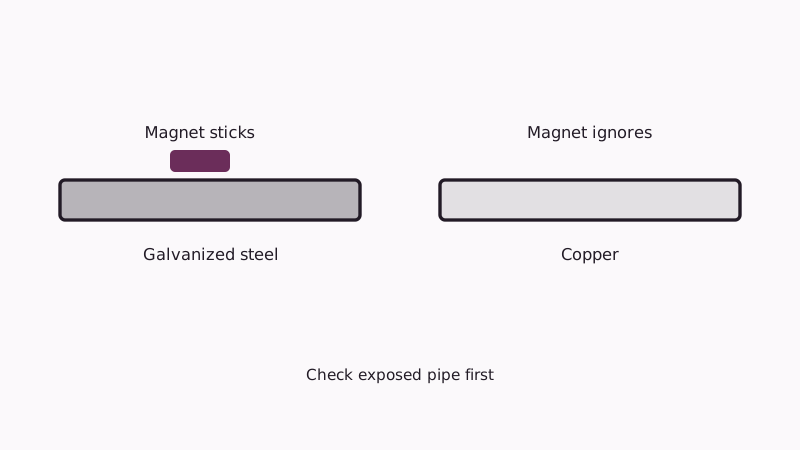
Look at the exposed pipe near the water heater, main shutoff or under sinks. The pipe is dull gray, joined with threaded fittings and often streaked with rust. Hold a magnet to it: steel grabs it, copper ignores it. A gentle scratch shows silver-gray metal, where copper shows orange-brown.
Check the age of the house as a guide. Galvanized supply pipe was common from the 1920s into the 1960s, and some sources say it faded earlier. Houses with a later remodel may have a mix: new copper or PEX in a bathroom, galvanized inside the walls. Take a photo of every visible pipe type and show it to a plumber.
A pipe that is soft, scratches to shiny silver and ignores a magnet may be lead, which needs different handling. Do not scrape lead pipe. EPA says homes built before 1986 are more likely to have lead in their plumbing, and the water utility can explain testing.
How long does galvanized pipe last?
Typical figures run 40 to 60 years, give or take, since water chemistry and use change the outcome. A house plumbed with galvanized steel in the 1950s is now well past that range, so replacement is a matter of when, not whether.
Water quality plays in. Hard water adds scale to the narrowing, and the groundwater and imported blend served here is on the hard side. You cannot see inside the pipe, so a house can seem fine right up until the pressure begins to sag.
Which symptoms mean the pipe has had its day?
Weak or uneven pressure, brown or orange water from a cold tap, rust at joints, leaks that keep popping up in new spots and flow that fades over the years all point the same way. Poor pressure at every fixture, even though the regulator is fine, is the classic clue of a narrowed pipe.
Try two easy checks. Open two taps together and watch whether flow collapses, then time how long a bucket takes to fill at the kitchen tap. A plumber checks pressure with a gauge on an outdoor tap and examines a cut length of pipe to see how much opening remains. One leak does not mean everything must go, but several in a short span usually do.
Related: why pipes burst and why people repipe a house.
Is galvanized pipe replacement worth it?
Often yes, once the pipe is past middle age and showing symptoms. Replacing it stops the leak cycle, restores flow and removes a source of rust in your water. Fixing one joint at a time is cheaper today but risks repeated damage in finished walls. Weigh your plans: if you will sell or remodel soon, replacing now can make sense.
Money is covered on repipe house cost. For a whole house, published guides show roughly $4,500 to $18,000 for the Los Angeles and Orange County area, with PEX toward the low end and copper toward the high end. Slab homes and two-story homes cost more. Drywall repair is often separate.
Partial replacement is possible, for example one bathroom or one riser, though the remaining galvanized sections still age. Plumbers sometimes find that new pipe joined to old galvanized causes trouble at the connection, so ask how each transition is handled.
How long is the house torn up?
Expect about two to five days of pipework in most single-family houses, longer for copper, two stories or slabs, then inspection and wall patching. The supply is typically shut for part of each day. Get the schedule and room order in advance.
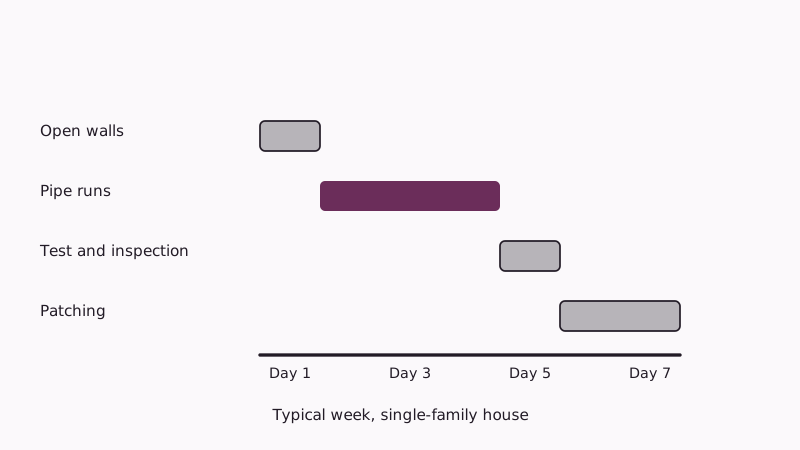
A realistic week goes like this: day one to set up and open walls, one to three days of pipe runs, a pressure test and inspection, then patching. Drywall and paint can add more time, and are often a separate trade. Plan for dust and a few days without full use of a kitchen or bath. In an older Anaheim or Fullerton home with plaster walls, patching takes longer than with drywall.
Does the work require a city permit?
Yes. Anaheim counts re-pipes among work that needs a plumbing permit. On the copy of its form we read, the repipe fee was $106 with a $182 minimum. Fees move, so verify with the city. Fullerton, Orange, Brea and other cities have their own offices and schedules.
Under state rules, permitted plumbing and any job worth $1,000 with materials included both require a contractor license. Pulling the permit and booking inspections is the plumber's task. The step by step repipe guide shows where the inspections fall. On deposits, California allows the smaller of $1,000 or 10 percent.
What about polybutylene pipe, is there a replacement program?
No program is paying for replacement now. The Cox v. Shell Oil class settlement for polybutylene plumbing stopped accepting claims in 2009, and reports say no active fund remains, so replacement costs fall on the homeowner. Be skeptical of anyone offering to file a claim for you.
Polybutylene is a different problem from galvanized steel. The flexible gray or blue plastic pipe went into a lot of houses from the late 1970s to the mid 1990s, and the weak point is the fittings. See our polybutylene pipe replacement guide.
Common questions
Can galvanized pipe be coated or relined instead of replaced?
Pipe relining and epoxy coating products exist, but for household supply pipe in older houses many plumbers prefer replacement, because the coating does not fix leaks at threaded joints and the pipe is hard to reach. Ask a plumber whether any lining product is permitted by your city and what its warranty covers.
Will new PEX connect to my old galvanized pipe?
Yes, with the right transition fittings, but dissimilar metals can corrode at the joint, and the old pipe keeps restricting flow upstream. A plumber uses dielectric or approved transition fittings. A partial repipe works best when the old pipe left behind is in good shape.
Is galvanized pipe dangerous to drink from?
Mainly it affects water quality and pressure, with rust discoloring the water. Older galvanized pipe can also trap lead from old lines and release it, according to some guides, and homes built before 1986 may contain lead in plumbing. If you are concerned, ask your water utility about testing and use a lead-rated filter meanwhile.
Does homeowners insurance cover replacing galvanized pipe?
Usually not as maintenance, because wear is excluded. Some insurers charge more or restrict coverage on homes with old galvanized or polybutylene plumbing. Ask your agent. If a pipe bursts and causes sudden damage, the damage may be covered, but the pipe itself often is not.
How can I tell polybutylene from other plastic pipe?
Search for bendy pipe in gray, blue or black, stamped PB, often found around the water heater and the main shutoff. Copper, CPVC and PEX look different. A plumber can confirm what you have, and nobody should scrape the pipe.
For the wider picture, start with plumber anaheim.
Sources
- Published plumbing guides on identifying and replacing galvanized pipe, checked November 2026
- Published reports on the Cox v. Shell Oil polybutylene settlement (claims closed 2009)
- Power Pro Plumbing, whole-house repipe cost guide for LA and Orange counties
- City of Anaheim, plumbing permit application
- EPA, basic information about lead in drinking water
Last updated