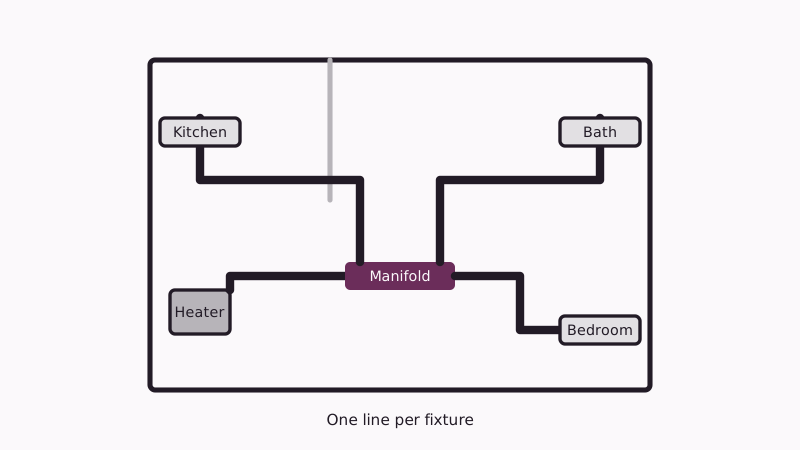
First comes a survey of every supply line. Then small holes are opened, new pipe is run, each fixture is reconnected, and the city inspects before any wall is closed. Most single-family houses take a few days. Do not mistake it for a weekend project: a permit applies, and so does the contractor license rule. Our repipe house page explains the service, and this guide shows what each stage looks like.
What happens, in order, when a house is repiped?
Water goes off and the system is drained. Openings are cut in the drywall at strategic spots, the old lines are pulled or abandoned, and new ones run to each fixture and the water heater. An inspector looks at the pipe before anyone closes a wall, and comes back once the patching is done.
In practice the days go like this:
- Walk-through. The plumber counts fixtures, finds the main shutoff and decides which route is easiest, attic, crawlspace or wall.
- Permit. The plumber's office files it, since the city inspects the finished lines.
- Rough-in. Water is off for much of the day. Manifold or trunk lines go in, then branches.
- Pressure test and inspection. The inspector watches the new lines hold pressure.
- Reconnect and patch. Drywall repair and paint are often a separate trade.
Ask early whether patching and paint are in the quote. They are often not.
What is involved when the new pipe is PEX?
PEX tubing is flexible, so it snakes through walls and attics off a central manifold or a branching layout, needing fewer cut openings than rigid metal. Fittings are crimped, clamped or expanded onto each end, and every connection sees test pressure before anyone closes the wall.
Southern California is mild, so freezing seldom decides the material here. The tubing is color-coded, with red marking hot lines and blue marking cold, and it tolerates cold better than copper. Sunlight damages it, so exposed runs need shielding. For the grades of PEX see PEX A or B, and for the material choice itself read PEX versus copper.
And a copper repipe, how does it differ?
Copper repiping follows the same sequence, but each joint is soldered or pressed, so it takes longer and needs more wall openings because the tube is rigid. A copper job costs noticeably more than a PEX job, and it suits owners who want a metal line that lasts decades.
Copper is also what many postwar tract homes in Buena Park, La Habra and Placentia already have. Old copper that fails in pinholes everywhere may be a reason to repipe, but the cause matters: water chemistry, flux residue and installation faults can all be to blame, so ask the plumber to look before assuming.
What if the house sits on a concrete slab?
With a slab there are two routes. One takes new lines through the attic and down inside the walls. The other breaks concrete and replaces the buried lines. The overhead route is usually cleaner and cheaper, since the old buried pipes are capped and left alone. Cutting concrete is the fallback.
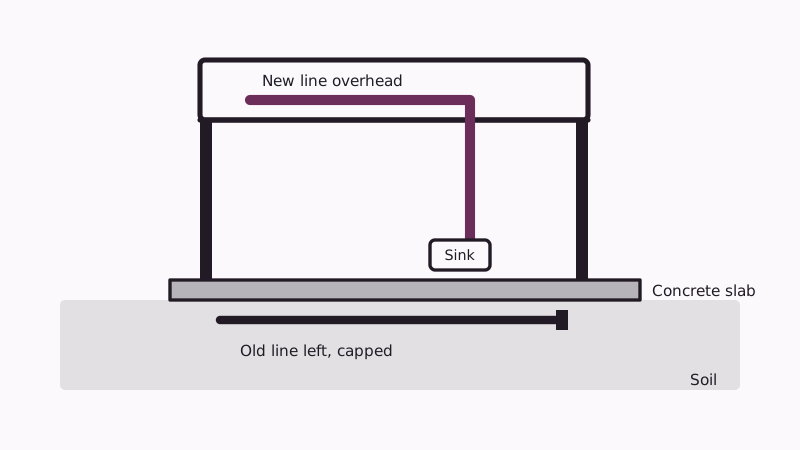
Overhead routing means more drywall openings, since every fixture needs a drop. Slab jobs often cost more than crawlspace ones. Many Southern California homes from the postwar decades sit on slab-on-grade foundations, and a slab leak is a common trigger. A slab leak that prompted all this? Weigh a spot repair against full replacement on slab leak repair or repipe.
Is repiping worth it?
Yes when failures keep turning up in different places, when rust inside the pipe has choked the pressure, when taps run brown, or when polybutylene is behind the walls. Rarely for one isolated leak. You are replacing a whole system, so judge it by the age and material you already have.
Warning signs include a fresh leak every few months, a metallic taste, feeble flow from every tap and green crust on copper joints. Galvanized steel, common in homes from before the 1960s in older Anaheim, Fullerton and Orange neighborhoods, corrodes from the inside out, and our galvanized pipe replacement guide goes through it. Polybutylene, a plastic pipe sold from roughly the late 1970s into the mid 1990s, is covered on polybutylene pipe replacement.
Our companion page, why repipe a house, looks at the decision from the cost side.
What will a whole-house repipe set you back?
Angi's 2026 guide says most homeowners spend $1,500 to $15,000 to repipe a house, averaging about $7,500, with its wider range running to $22,000. PEX is the cheaper material and copper costs more. None of it is a quote for your house, so collect written bids.
| Item | Typical effect |
|---|---|
| PEX | The lower-cost material |
| Copper | Costs more, and takes longer to install |
| Slab foundation | Often costs more than crawlspace work |
| Extra bathrooms | Each one adds fixtures and cost |
| Drywall repair | Often separate, so ask |
For more figures go to repipe house cost or the PEX repipe cost guide. Line the bids up side by side so each covers the same scope.
Does Anaheim want a permit for this work?
Yes. Anaheim lists re-pipes among the jobs that need a plumbing permit, and its Building Division takes questions on (714) 765-5153. Other cities, from Fullerton to Brea, run separate building offices, so ring the one covering your street before booking. Fees and inspection steps differ from one city to the next, and the plumber should know the local routine.
The plumbing permit form Anaheim publishes listed a $182 minimum permit fee on the copy we read. Fees move, so ask for today's schedule. Work on the water meter or service line outside the property can need separate approval.
Permitted plumbing in California goes to contractors holding a license. Confirm the license number on the state board website before signing. A deposit may not exceed $1,000 or ten percent of the contract, if that comes to less.
How many days, and what happens to the water meanwhile?
Expect two to five days of pipework for most houses, longer for copper, two stories or slabs, with inspection and patching on top. Water is often off during the working day and restored in the evening, though the plumber should lay out the plan for your house first.
Plan for dust, holes in the walls and a few days without full use of kitchen and bathrooms. Sort out where you will shower, and ask when the inspector visits, because a missed inspection can stall the job. The supply here mixes groundwater from the Orange County basin with imported water, and the utility's yearly water quality report states hardness, worth a glance when choosing pipe.
Common questions
Can I repipe a house myself?
Not sensibly. A permit is needed, permitted plumbing generally falls under the contractor license rule, and a homeowner who repipes to sell or rent can land in trouble. Owner-builder exceptions are narrow, and the inspection, pressure test and risk of a buried leak all point to a contractor.
Is PEX better than copper for repiping?
Neither is better in every home. PEX costs less, installs faster and resists pinholes, while copper lasts a long time, handles sunlight and heat, and holds resale appeal. Your water chemistry, budget and house layout decide it. Ask why a plumber leans one way, and request both prices.
Will I need to patch drywall after a repipe?
Usually yes, in a number of places. Even PEX needs openings at fixtures and where lines turn. Many repipe quotes exclude drywall repair and paint, so ask. Some plumbers include basic patching and others leave a drywall-ready surface, and each choice changes the price.
Can part of the house be repiped?
Yes. A partial repipe replaces one section, such as the lines to a bathroom or the kitchen run, and leaves the rest. That suits a house where one area is failing while the remaining pipe is sound. When the same material runs through the whole house, the other lines are likely to follow.
What happens to the old pipes?
In walls they are often left in place, disconnected and drained, because removing them would mean opening more drywall. Where they are accessible they are pulled out. Old galvanized or lead-containing parts raise their own handling questions, so ask the plumber how they dispose of them.
This guide is one of many on Anaheim plumber.
Sources
Last updated