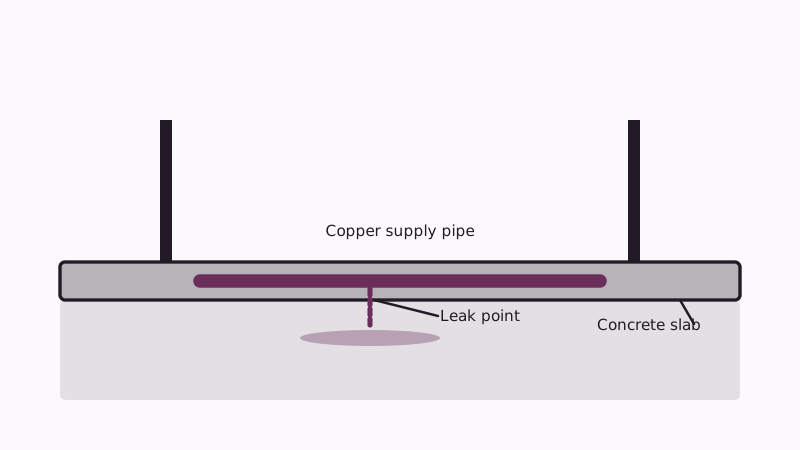
Sometimes. A homeowners policy generally covers water damage that is sudden and accidental, and generally excludes leaks that seep over time, plus wear and tear. A slab leak sits in between, which is why claims are decided case by case. This page is general information from the state's consumer guides and is not insurance advice. For the plumbing side of leaks, start with our burst and leaking pipe guide.
What does California say a homeowners policy covers when water escapes?
The state insurance department's consumer guide treats water damage that is sudden and accidental as covered in a homeowners policy, and lists damage from seepage or leaks, wear and tear, maintenance problems and neglect as generally not covered. Flood is separate and normally excluded. The department adds a plain instruction: read the exclusions in your contract.
That means the word "sudden" carries the weight. A pipe that fails abruptly and soaks a floor fits the covered description more comfortably than a pinhole that has wept into the slab for months.
Will insurance pay to fix the pipe under the slab itself?
Often not. Many policies treat the cost of repairing the failed pipe as a maintenance item and pay only for the resulting damage, such as flooring, drywall and cabinets. A few policies add money for getting at the pipe, and the wording varies from one to the next, which makes tear-out the usual point of argument.
Sources in the plumbing and claims world disagree about access costs, which is why you should not rely on a general answer. Ask the insurer, by email or letter, whether your policy pays to break the slab and which clause applies.
Which steps come before filing a claim?
Protect the property and document it. The state's guide says homeowners should try to find and stop leaks at the source, and warns that a policy may not cover further damage if you did not take reasonable steps. Shut the main valve if water is flowing, move belongings, and photograph everything before cleanup.
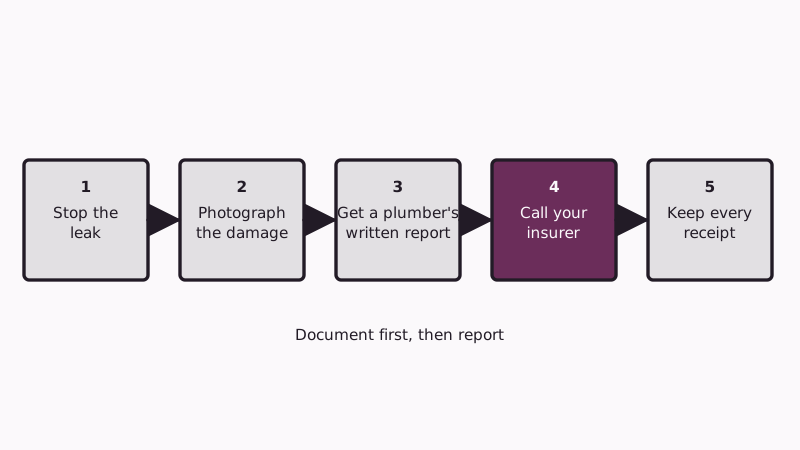
Then report the claim promptly to your agent or insurer. Hold on to receipts for drying, hotel stays and emergency work. A plumber's written detection report is useful proof of the leak's position and its likely start.
How do insurers decide between a sudden leak and a slow one?
They look at evidence: the plumber's report, the pipe condition, mold, staining, water bills and the timeline. Older copper that has corroded, or galvanized pipe that has rusted through, often reads as wear and tear. A fitting that suddenly let go reads differently.
In Anaheim, Fullerton and Orange, many slabs in tract homes carry copper lines laid in the floor, so slab leaks are common enough that adjusters see the pattern often. A mold finding can complicate things, since the state notes that mold from a covered peril may be covered while long-term leakage generally is not. See the leak detection page to understand how location and cause are established.
What can I do if the claim is denied?
Have the adjuster identify the precise clause behind the refusal. After a covered loss, California Insurance Code section 2084 has the insurer give you a complete copy of your policy free of charge, within 30 days of your request, so check the statute for any change. If you disagree with the answer, the California Department of Insurance runs a consumer help line at 800-927-4357.
Get a second opinion on the cause from a plumber, because the cause often decides the result. For a pipe that fails suddenly, read the page on insurance and burst pipe claims.
What are my options if the repair comes out of my own pocket?
Then the plumbing options and costs matter. A slab leak can be repaired in place, rerouted overhead, or handled by replacing the whole supply system, depending on how many leaks and what pipe you have. Prices vary widely by access and length of pipe.
Our notes on slab leak repair cost and on choosing between a slab repair and a repipe explain the ranges and tradeoffs. Any quote should name its method, and our quote form starts one.
What signs of a slab leak are worth photographing?
Warm spots on a floor, a hot water bill that has crept up, a hiss behind a closed-up house, damp carpet along a wall, a dial that creeps while nothing runs, and cracks or a musty smell near the base of a wall are the usual clues. Photograph each one with a date, and keep the bills.
EPA's leak guidance offers a meter test: record the reading, use no water for two hours and then write it down again. A change supports a leak, and a note of the numbers goes in the claim file. It is evidence for the insurer and a head start for the plumber who has to find the leak.
Common questions
Is a home warranty the same as homeowners insurance?
No. The state's guide says home protection contracts are separate from insurance and cover repair or replacement of major systems that break down from normal wear and tear. A warranty might cover a failing pipe where insurance would not, but coverage and limits vary, so read the contract for plumbing and slab exclusions.
Should I wait for the insurer before stopping the leak?
No. Stop the water and secure the property right away, then report. The state's guide warns that further damage may go unpaid if you did not take reasonable steps. Tell the insurer what you did and keep proof, including photos taken before any drying or repair.
Does a deductible apply?
Yes, in most cases. When a small slab leak does modest damage, the total can land below the deductible, and then nothing is paid. Ask your agent how a small claim is handled, and what it could mean for your record, before you file.
Who can tell me what my own policy says?
Your insurer or agent, and the policy itself. Ask for the full policy copy, read the water damage and exclusions sections, and ask the adjuster to point to the clause behind each decision. This site cannot interpret your contract. Visit the Citrus Belt home page if you need a plumber to document the leak.
Sources
Last updated