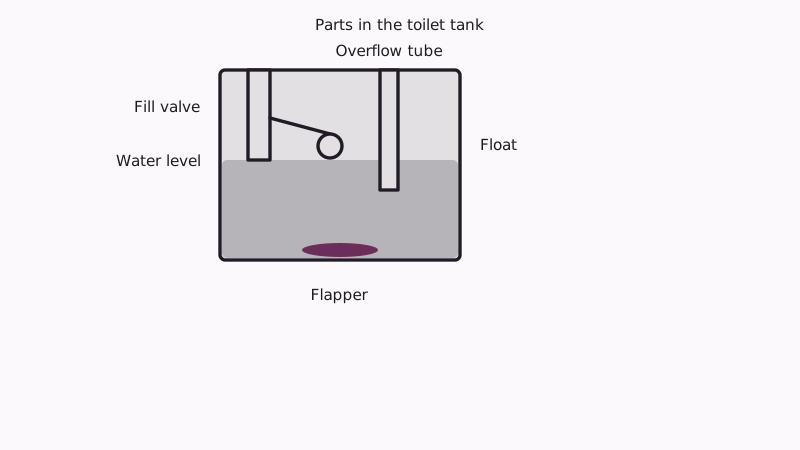
Pop the tank lid and study the water for a minute. A trickle running into the overflow pipe implicates the fill valve. A level that holds steady while the bowl tops itself up every so often points to the flapper not seating. Between them, those two parts account for most running toilets. This page sticks to the running problem; the Citrus Belt Plumbing site also carries a Toilet Repair page covering other faults.
Why is my toilet running when nobody has flushed it?
Because water is escaping past the outlet seal, or the tank never registers as full. Typical culprits: a worn rubber flapper, a chain set too tight or too loose, a fill valve that no longer closes off, or a float adjusted so high that water spills into the overflow tube.
A flapper blocks the outlet while a float-driven fill valve refills the tank after every flush. Wikipedia's flush toilet article observes that flappers frequently begin to leak within a couple of years. Once one does, the tank slips a little, the fill valve opens to compensate, and the toilet seems to run by itself at odd intervals.
Which part is the one failing?
Use a dye check. Put a few drops of colored dye in the tank, leave the handle alone, and wait ten minutes. Should the bowl pick up the dye, the flapper is leaking. A steady hiss with a clear bowl suggests the fill valve or the float height. Flush when done so the dye cannot stain the tank.
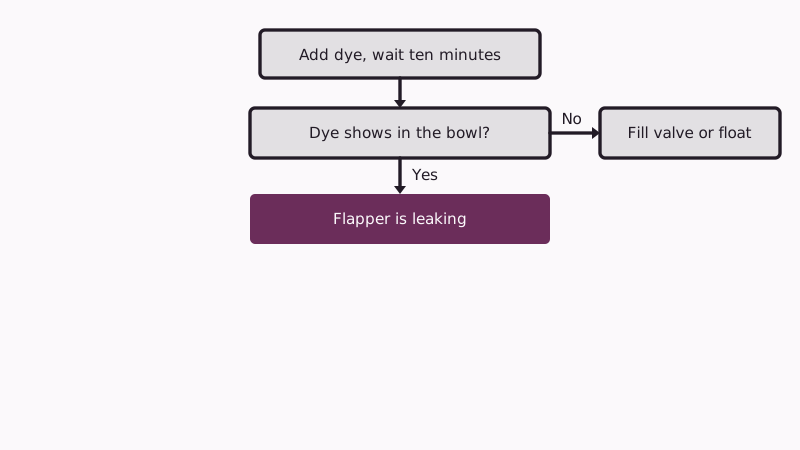
The EPA recommends the same test during Fix a Leak Week, and notes that a tired flapper can quietly waste thousands of gallons each year. Across a typical home, leaks add up to more than 9,300 gallons annually, which makes a running toilet worth fixing now instead of later.
How do I fix a toilet that keeps running, step by step?
Close the stop valve down by the floor, flush to drain the tank, and begin with the cheapest remedy. Adjust the chain, then clean or swap the flapper, then reset the float, and replace the fill valve last. Each step usually takes less than half an hour.
- Chain: allow roughly half an inch of slack. A taut chain holds the flapper up; a long one can tuck beneath it.
- Flapper: wipe the seat clean with a rag to remove grit. Rubber that is soft, warped or slimy should be replaced; carry the old part or a picture of it to the store, since sizes and float designs vary. Details in toilet flapper repair and flapper valve types.
- Float: lower it until the water stops roughly an inch under the top of the overflow tube. A screw or clip on the fill valve does the job.
- Fill valve: when it still will not close off, replace it; the swap is walked through in fill valve repair.
Does Anaheim's hard water make a toilet run more often?
It can. Anaheim water is very hard: the City lists it at around 300 parts per million, roughly 18 grains per gallon. Mineral scale builds up on the flapper seat and inside fill valves, which stops them sealing. Cleaning the seat each time you replace the flapper helps, and so does replacing an old valve rather than rebuilding it.
Older houses in Anaheim, Fullerton and Orange bring a second wrinkle. Original brass or chrome-plated stops can corrode and weep, so the first clue may be a damp floor rather than a noise. A stop valve that will not turn should be left alone and handed to a plumber, since forcing it can snap the pipe.
What if the water keeps running after I replace the parts?
Inspect the overflow tube first: a hairline crack drains the tank into the bowl however good the flapper is. Also check for a bent handle arm or a handle that sticks and keeps the flapper lifted. If none of that explains it, the trouble lies in the porcelain or the supply, and a professional should look.
A cracked tank or a failed tank-to-bowl seal means replacement. The overflow tube page shows what damage looks like, and weak flush fixes cover incomplete flushes.
At what point is a professional worth calling for a running toilet?
Call for help if the stop valve is seized or weeping, the floor is wet, new parts change nothing, or the tank has cracked. Same advice if working beside the supply line is not for you. A typical running toilet is a single-visit repair.
Have the price confirmed in writing prior to any work. If the whole toilet may need to go, toilet replacement cost shows what moves the price. To request a visit, send the quote form, and a local plumber comes out around Anaheim and nearby. Thanks to the simple parts involved, many running toilets are done within an hour.
Common questions
Why does the tank top itself up at random?
A slow leak is draining the tank into the bowl. The level dips just enough for the fill valve to open, refill, and close again. Scale on the flapper seat, or a flapper hardened with age, is the usual reason. Cleaning the seat or fitting a new flapper normally ends it.
What does a running-toilet repair cost?
Flappers and fill valves are cheap parts at any hardware store, so doing it yourself costs little but time. A plumber adds labor, so the bill follows the visit and the part. Get a figure in writing first, and treat online numbers as rough guides.
Does a leaking toilet push my water bill up?
Yes. A toilet that never stops can waste a lot of water without making any noise, and the EPA warns that silent flapper leaks can lose thousands of gallons yearly. If your bill jumps for no clear reason, run the dye test first, since it takes ten minutes and costs nothing.
Should I replace the whole toilet if it keeps running?
Usually not. Tank parts are inexpensive and easy to replace, and a whole toilet is warranted only by cracks, repeated clogging or age damage. If you do shop for a new one, WaterSense-labeled models save water per flush, and the EPA suggests considering one when repairs will not hold.
Is it safe to fix a running toilet myself?
Yes, for the tank parts. You are working with plain water at low pressure and need a screwdriver or pliers at most. Turn off the supply first. Hand it over if the stop valve refuses to close, the supply line looks corroded, or you spot dampness at the wall.
Sources
Last updated