Before any tools, find out what is really loose. Sit down and shift your weight. If only the seat slides while the bowl stays put, you have a hinge problem and can fix it yourself. If the whole toilet rocks against the floor, skip ahead to the toilet repair overview, since a moving bowl suggests a tired base seal or loose bolts and can end in leaks. The sections below start with the easy case.
Which part wobbles: the seat or the whole fixture?
Put a hand on the rim of the bowl and push gently from side to side while someone watches the base. A seat that moves alone is a hinge issue. A bowl that shifts at the floor, or a seat that is fine but the toilet creaks, means the closet bolts or wax ring have loosened, and tightening the seat will not help.
As a second test, raise the lid and seat, then try to shake the bowl alone. It should feel solid. Anything more than a hair of movement needs attention soon, since a rocking bowl can break its seal and let wastewater seep into the subfloor. Check for staining, spongy flooring or a sewer odor beside the base.
Tank wobble is a third thing: a tank that rocks against the bowl has loose tank bolts. See repairing a leaking tank for those.
How do I tighten the hinge bolts?
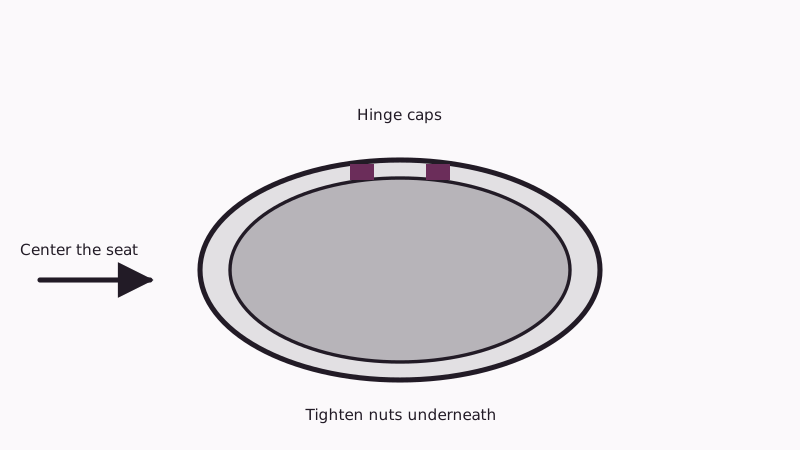
Study the rear of the seat. Two plastic caps usually hide the hinge bolts. Flick them open with a slotted driver, and if the nut turns along with the bolt, hold it still from below, and drive the bolt clockwise until the seat no longer budges. Stop when it is firm. Over-tightening can crack the porcelain.
When the nut just spins and nothing bites, reach under the rim, pin the nut with pliers or fingertips and keep turning the bolt from the top. Plastic nuts strip easily, so use a gentle hand. Some seats use a wing nut you can turn by hand.
Once it is firm, slide the seat to center before the last quarter turn. The hinge holes are slotted so the seat can be adjusted left or right, and this is the main cause of drifting. Lower the seat and check that the lid and seat line up with the bowl edge.
What if the bolts keep loosening or the seat is the bottom-fix type?
Many modern seats attach from underneath, with a hidden nut or a quick-release clip. Look for a small button or tab on the hinge. Press it and the seat slides off for cleaning, and the same hardware holds it tight when seated. If it rattles, lift the seat, reseat it fully and tighten the slotted nuts underneath.
When tightening does nothing, the parts are worn. Plastic bolts stretch, rubber bumpers flatten, and the slots in the hinge can wear into ovals. Replacing the seat is cheaper than repairing it. Measure the distance between the two bolt holes, and the bowl shape: round or elongated, since they are not interchangeable.
Metal hinge bolts can corrode, particularly in older houses in Anaheim, Fullerton and Orange where the fittings have been in place for decades. A few drops of penetrating oil and some patience free a rusted nut. A hacksaw blade can cut a stuck bolt as a last resort, taking care not to touch the porcelain.
What is the process for fitting a new seat?
Remove the old one by unscrewing the nuts under the rim and lifting the bolts out. Clean around the holes with a damp cloth and mild cleaner. Set the new seat's bolts through the holes, place the washers and nuts, and tighten just enough to hold, then center the seat before the final snug turn.
Bring the old seat or its measurements to the store. Round and elongated seats are sold separately, and sizing differs among brands. Some include a soft-close hinge that is worth the small extra cost. Check the fit before you throw the packaging away.
With the seat out of the way, wipe beneath the hinge area, where grime collects. A sparkling base makes any slight leak at the floor easier to see later.
Which symptoms mean a plumber should check the fixture?
Book a visit if the bowl itself rocks, water pools at the base, the floor gives underfoot, the floor bolts have rusted through, a cracked flange shows or the toilet leaks after a flush. All of these trace back to the wax ring, flange or floor rather than the seat.
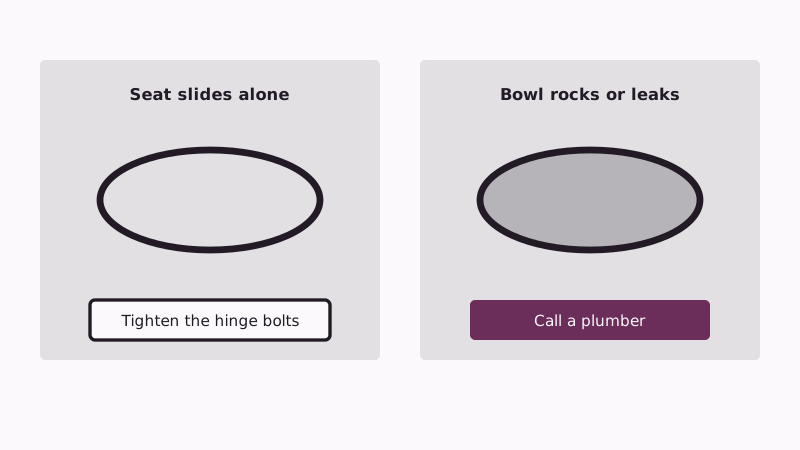
A plumber lifts the toilet, checks the flange and the floor, fits a new wax ring and sets the bowl back with new bolts. Prices for that kind of job are in toilet replacement costs, and a related hardware fault is covered in flush handle and mechanism repair.
Note what you are seeing on the quote page and we will find a plumber nearby to inspect. More of the service is on the Citrus Belt home page.
Common questions
Why does the wobble keep returning?
The nuts work loose with daily use, and plastic bolts stretch over time. A seat set off-center also gets pushed back out of line. Tighten with the seat centered, and check the nuts every few months. If it keeps happening, the hinge slots or bolts have worn, and a new seat is the fix.
Can I use any seat on my toilet?
Not freely. Two bowl shapes exist, round and elongated, and the seat has to follow whichever you own. The distance between the hinge holes is nearly standard on most US toilets, but measure to be sure. Some designs, such as a one-piece or a compact toilet, have unusual shapes. Compare the bowl's width and length with the box.
Does a loose seat count as plumbing?
Usually not. It is a hardware matter that a household member can handle. A loose bowl is a plumbing issue, since it can break the seal. If you flush and the toilet moves, or water appears at the base, call a plumber to inspect it.
How do I keep the seat from loosening again?
Tighten the bolts firmly but not forcefully, center the seat before the last turn and check them every few months. A seat with rubber washers or a locking nut grips better. Cleaning under the hinges, with a mild cleaner, also lets you notice early when something has started to shift.
Sources
- Published manufacturer and home-repair guidance on toilet seat hinge types and bolt tightening, checked November 2026
Last updated