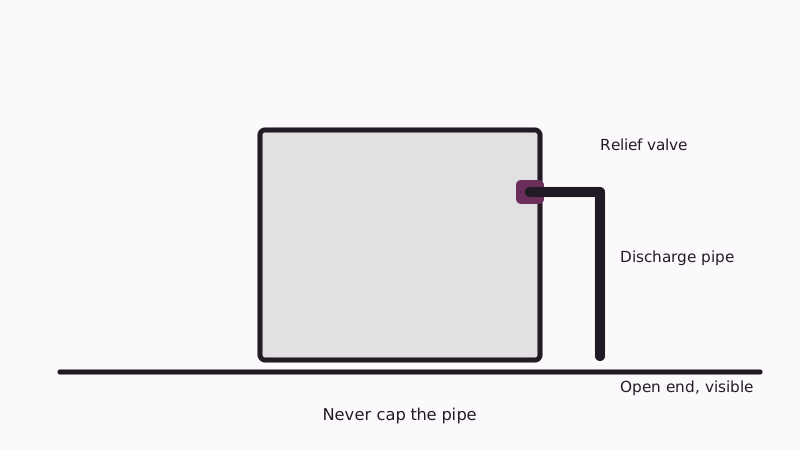
This valve is the emergency vent mounted on top of or beside the tank. If heat or pressure climbs too high, it opens and dumps water so the tank does not keep building up. Fixr's 2026 figure for swapping one, labor included, is $100 to $250. Other fixes are listed on the main water heater page; this article sticks to the one part and what moves its price.
How much should a new relief valve run?
Fixr lists a pressure relief (T&P) valve replacement at $100 to $250, including labor, inside an overall heater repair band of $150 to $750. A call-out fee of about $50 may be added, and may be credited if you book the repair, and emergency surcharges of $100 to $200 can apply.
| Item | Guide range |
|---|---|
| T&P relief valve replacement | $100 to $250 |
| Call-out fee | about $50, sometimes waived |
| Emergency surcharge | $100 to $200 |
| Typical heater repair | $150 to $750 |
These are national numbers from one guide. They do not include a new expansion tank, a new drain line or a permit, so read them as a floor and expect the plumber's written quote to itemize every line.
What does a relief valve do, and why must it be there?
On a water heater, the valve releases water when the temperature or pressure inside gets too high, according to Wikipedia's overview. Codes generally require a discharge pipe from it, usually routed to a drain or outside the living space, so the hot water has somewhere safe to go.
Which is why nobody should plug, cap or block it: should the thermostat or gas control fail, this valve alone stands between the tank and a rupture, which is also why it deserves a test now and then. A relief valve that works is a part you will not notice; one that stays shut when it should open is a hazard. Rheem suggests having a professional test it as part of maintenance.
Why is mine dripping, and does that mean it needs replacing?
A valve may drip because it is worn or has mineral scale on its seat, because pressure in the house is too high, or because water expanding as it heats has nowhere to go. A tired valve needs replacing, but a fault elsewhere in the system will make the new one drip too.
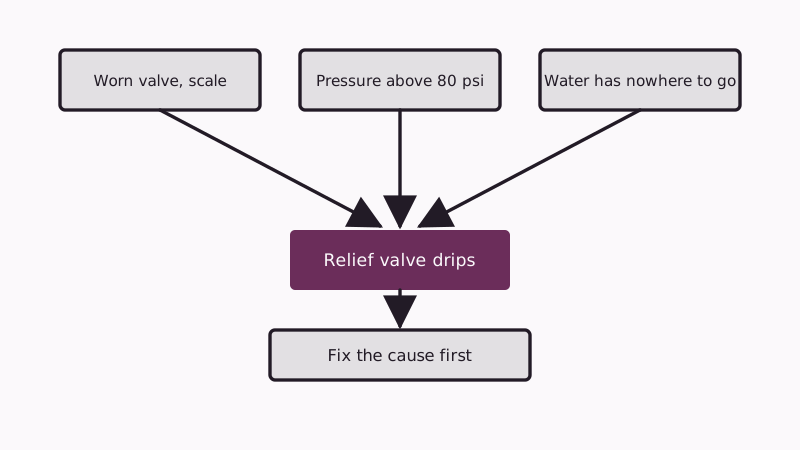
Hard water speeds the first cause: with hardness near 18 grains per gallon in Anaheim, scale can stop a seat from sealing. The second and third causes are about pressure. Static pressure above 80 psi calls for a regulator under the plumbing code, and an approved expansion tank placed downstream of it on the cold supply. A house with a regulator and no expansion tank may weep from a relief valve each time the heater cycles. See setting a regulator and expansion tank replacement.
What else can add to the bill?
Extra items include a new discharge pipe or an extension to reach a drain, an expansion tank, corroded fittings that break during removal, a regulator replacement, and emergency pricing after hours. Each is its own line, so a plain valve swap becomes a larger repair when the cause is pressure.
Picture it this way: a $100 to $250 valve swap plus a separately priced expansion tank and perhaps a regulator is a bigger job than the swap alone, which is the reason an estimate should explain what was found. For the regulator side, see regulator replacement cost. Also ask where the discharge line ends and whether the new valve gets tested afterward.
Can I replace a relief valve myself?
It is better handled by a plumber. The valve connects to a tank full of hot, pressurized water, and an error means scalding, a flood or a valve that fails when needed. Many manufacturers tell owners to leave the replacement to a professional, so read your manual first.
Licensing applies to jobs of $1,000 or more once parts and labor are added up, and a valve swap lands beneath that, yet risk, not price, is the reason to hire help. If you want a visit arranged, go to the quote page.
Should I replace the valve or the heater?
A new valve is a sensible repair on a dry tank that is not yet ten years old. Rheem leans toward a new heater when repairs pass half the price of one, if the tank itself leaks, or if an older unit keeps developing faults.
A relief valve that keeps discharging on an old heater may be reacting to something larger, such as sediment, a failing thermostat or high house pressure. For a view of the numbers, see water heater repair costs and replacement costs. Buying a new heater brings a city permit and earthquake strapping into the picture as well.
Common questions
How often should the relief valve be tested or replaced?
Rheem recommends a professional test during maintenance, with replacement called for if it weeps, sticks or flunks the test. No fixed interval appears in the sources checked here. Annual tank flushing and inspection is a good time to have it looked at, especially with hard water.
Is a dripping relief valve dangerous?
It can be a sign of high temperature or pressure, so do not ignore it. A drip is also the valve doing its job if the system is over-pressurized. Do not plug or cap the discharge. If water is steaming, scalding at the pipe or flowing steadily, set the heater control to off and phone a plumber.
Where does the discharge pipe go?
Codes generally require a pipe from the valve to a drain or an outside spot where hot water is not a hazard, and Wikipedia notes some codes allow it to end in a garage. Check with your city's Building Division. Never cap or valve the end of it, and let the plumber confirm the routing.
Does the replacement need a permit?
Installing a whole new heater requires a city permit. Swapping only the valve is smaller, and the answer differs between cities, so ask both the plumber and the Building Division. Your estimate ought to name who files any permit and the fee.
For the wider picture, start with plumber in Anaheim.
Sources
- Fixr, water heater repair cost guide, checked November 2026
- Water heater, Wikipedia (temperature and pressure relief valve)
- Pressure relief valve, Wikipedia
- California Plumbing Code 2025, section 608.2 Excessive Water Pressure
- Rheem, water heater lifespan, repair versus replace
- City of Anaheim Water Hardness page
Last updated