Tankless heaters make hot water on demand, but they cannot shorten the walk the water takes from heater to faucet. A far bathroom can still run cold for a minute while gallons go down the drain. A recirculation pump moves hot water through the loop so that it is already waiting. Whether it pays off hinges on the piping, and that is where any installer begins. For the wider picture of heater work, start at water heater repair and replacement.
Do I need a recirculation pump on a tankless water heater?
You need one only if the wait at the farthest fixture bothers you. A pump does not change how fast the heater heats. It shortens the delay by keeping hot water near the taps, saving the water you would otherwise pour away. Homes with long runs, a second story or a big lot gain the most.
Think about the numbers in your own house. Count how many seconds a faucet runs before it turns hot, and how often you do that during the day. A distant shower that takes a minute to warm, used a few times daily, is the classic case.
A short, compact plumbing layout may gain little. In that case, insulating the hot pipes is cheaper and still helps.
How does a recirculation system work with a tankless unit?
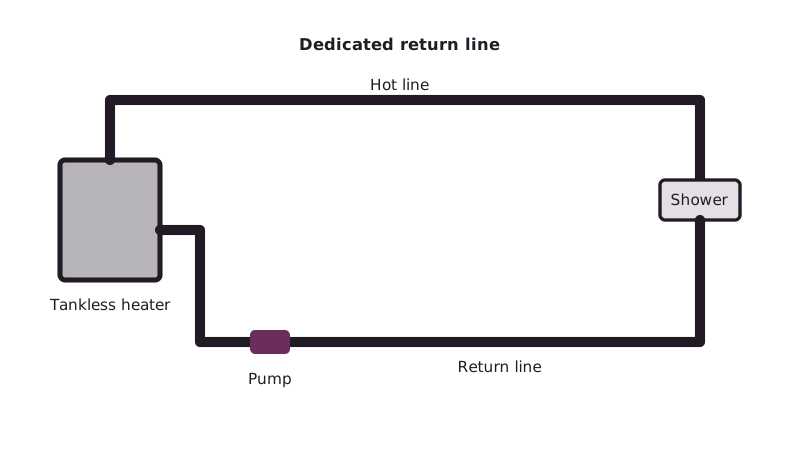
A small pump sends water from the hot line through a return path back to the heater, either all the time, on a timer or when a button is pressed. Tankless models respond in different ways, and some have the pump built in. A unit that cannot recirculate on its own needs an add-on kit or an outside pump.
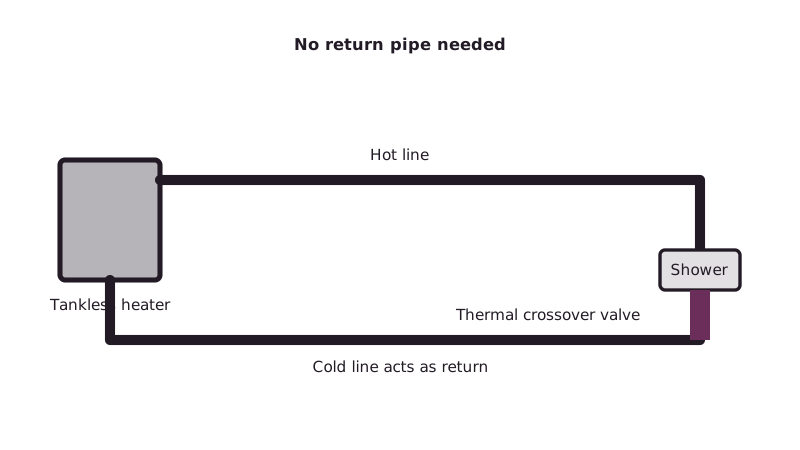
There are three common setups:
- Dedicated return line. A separate pipe runs from the farthest fixture back to the heater. This is the most reliable and the most work to add after the fact.
- Crossover or bypass valve. No return pipe: a thermal valve at the far fixture lets hot water cross to the cold line, which then acts as the return. It is simpler to retrofit, but cold taps can run warm at times.
- Built-in pump. Some tankless heaters from manufacturers like Rinnai and Navien offer models or modules with recirculation included. The unit's manual states what it supports.
What does California require for recirculation?
California's energy code treats recirculation as an energy matter, because a pump running around the clock wastes gas and heat. For a single-family home, a new recirculation system generally needs demand control, meaning the pump runs when someone asks for hot water, not constantly. Accessible hot pipes also have to be insulated.
Rules change with each code cycle, and the details depend on whether you are adding a system or replacing equipment. One guide for the 2025 cycle says that new single-family systems should be demand recirculation with manual on and off control, and that other types need a different compliance route. A plumber should confirm what applies and pull the permit.
That permit goes through the Building Division of your city. How permitting goes in Anaheim, Fullerton and Orange is explained under water heater permits.
What does a recirculation pump cost to install?
Price guides show about $200 to $800 installed for adding a pump to a tankless heater, with a basic demand pump near $200 to $400 and the pump itself costing a few hundred dollars. The big variable is a return line. Putting one in during other work can be modest, but adding one later can run into four figures.
Parts for a brand-specific kit often cost more than a generic pump, since manufacturers sell their own modules at a few hundred dollars each. A tankless unit with a built-in pump generally costs several hundred dollars more than one without.
None of these figures is a local invoice. Use them to sanity-check an offer, and have the written quote name the pump, its control and the return arrangement. Compare the cost against a full unit on the tankless installation cost page.
What does the installation involve?
A plumber shuts off water and gas or power, adds the pump near the heater, connects the return path, fits a check valve and sets the control. With a crossover valve, the work happens at the farthest fixture under the sink. Then the system is purged, tested and checked for leaks, and the heater settings are confirmed.
Details that separate a good job from a poor one: the pump should sit where it can be reached, the hot pipes in the loop should be insulated, and the heater should be flushed if it is due. In Anaheim's hard water, the loop also circulates minerals through the heat exchanger, so scale control matters. The page on how a tankless unit is installed covers the rest of the work.
Brand notes: Rinnai and Navien each publish instructions for their own recirculation options, and installers follow them. Brand-specific pages: installing a Rinnai and installing a Navien.
Which faults show up, and who should handle them?
Common faults are a pump that runs constantly because the control is set wrong, lukewarm water at cold taps with a crossover valve, a loud or failed pump, and error codes on the heater. Gas heaters also need correct venting, so if a fault ever arrives with the smell of gas, step outside before calling, then dial SoCalGas on 1-800-427-2200 for its emergency line.
Installing a pump means opening plumbing and, on some units, working near gas and electrical connections. Gas piping and heater permits fall under the rules for trade work, so hand this one to a plumber. Lost your hot water after an install? A tankless unit with no hot water steps through the checks. A visit can be requested via the quote page, and other jobs are listed from the Citrus Belt home page.
Common questions
Will a pump make my gas bill go up?
It can. Hot water kept moving through pipes loses heat, and the heater fires more often to replace it. Demand control, which runs the pump only when asked, keeps that small, and insulated pipe keeps it smaller. A timer helps if a household has a fixed schedule.
Can any pump be added to any tankless heater?
No. The heater, the plumbing and the code all have a say. Some heaters need the maker's kit, others accept a separate pump with a check valve. Using the wrong pump can damage the heat exchanger or void the warranty. Ask the plumber to match the pump to the model number.
What is the length of a typical job?
A pump on a house with an existing return line is a short job, commonly a few hours. A crossover valve adds time at the far fixture. Running a new return line through walls or a crawl space takes longer and may need drywall repair. The quote should say which situation applies.
Is it better to insulate my hot pipes first?
Often it is a smart first step, and the energy code already expects accessible hot lines to be wrapped whenever a heater is changed out. Insulation keeps water warm longer but does not remove the wait entirely. A pump solves the wait. In a long house, you will probably want both.
Sources
- BayREN, Residential Water Heater Replacements: Permit Guide to the 2025 Energy Code (recirculation controls)
- California Energy Commission, 2019 Residential Compliance Manual, Chapter 5 Water Heating
- Published installed-price guides for hot water recirculation pumps, checked November 2026
Last updated