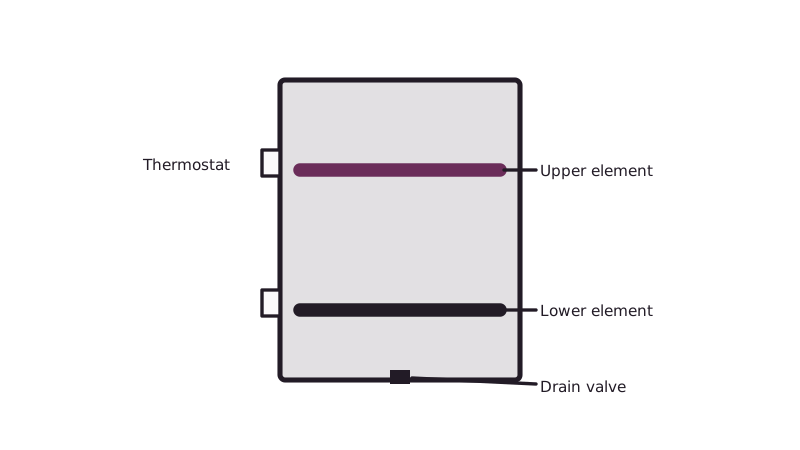
Numbers first. An electric tank heater with one dead element typically costs $150 to $350 to fix with a plumber, though a few guides print $100 at the bottom and $450 at the top. The element itself is a small part; the rest of the bill pays for draining the tank, getting into the panels, testing and the trip. Below: what moves the price, how to confirm the element is the culprit, and the point where a new heater is the smarter spend. Wider heater trouble lives on the water heater repair page.
What do people pay to have one element swapped?
Published guides cluster the whole visit around $150 to $350. A single element costs about $15 to $60, and labor supplies the bulk of the remainder at about $100 to $250. Plumber hourly rates quoted in the same guides range from about $50 to $150.
What the quote lines usually look like:
| Line | Typical figure |
|---|---|
| One standard element | $15 to $60 |
| Second element in the same trip | Part cost only |
| Labor and trip | $100 to $250 |
| Total for one or two elements | $150 to $350 |
All of it is drawn from cost-guide websites, not from a local rate card, so use it as a yardstick against the figure you are given.
Does a gas heater have elements to replace?
It does not. Heating elements exist only on electric tanks. A gas heater fires a burner under the tank and depends on a thermocouple, gas control valve and pilot or igniter. If gas is ever smelled around a heater, everyone goes outside first. SoCalGas can then be reached at 1-800-427-2200, and 911 handles any risk to people.
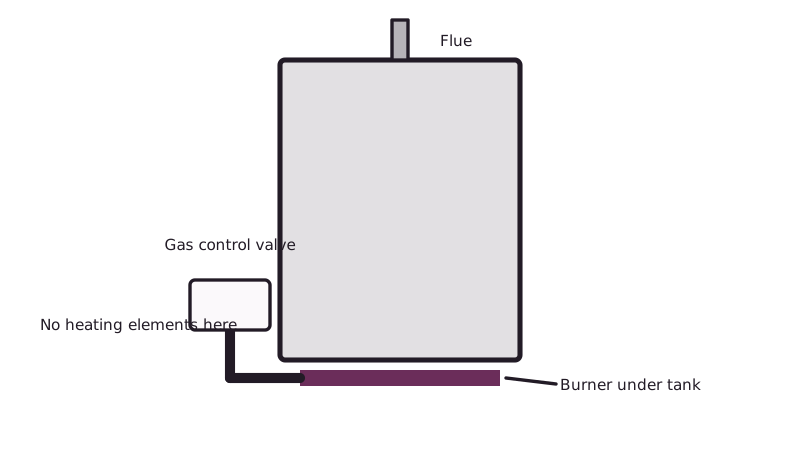
Unsure which kind you own? Electric models have a cable or conduit entering the top or side and no flue pipe. For a gas model with cold showers, read about a lit pilot but no heat.
Electric tankless units use their own heating parts, with a different price pattern again.
Which details raise or lower the invoice?
Four details do most of the pushing: draining the tank or not, how awkward the panels are to reach, whether one element or two are being swapped, and how worn the heater is. A tank with seized fittings or thick scale takes longer, and a call-out that turns into a larger repair is billed as that larger repair.
Anaheim's water adds a local factor. Hardness here sits near 18 grains in each gallon, per the city, and mineral crust on an element works like a blanket, trapping heat until the metal fails. Low-density elements run somewhat higher and are commonly suggested for hard supplies, since scale clings to them less.
Also in play: a heater wedged into a closet or an attic, a second element that tests dead, and a thermostat or wiring fault discovered once the cover is off.
How can I be sure the element is the culprit?
Look at the symptoms, then test. Lukewarm water, a short supply that runs cold fast, a breaker that trips again and again, or no heat whatsoever, all fit a failed element. They also fit a bad thermostat, a tripped high-limit button or a dead breaker, which a meter separates in minutes.
The two elements fail in different ways. When the upper one dies, taps may run completely cold, since the top of the tank heats first. A dead lower one tends to leave a small supply that disappears quickly. Plumbers test both with a meter, and commonly replace the pair while the tank is drained, since the survivor has done the same service.
More symptom-led detective work is in what leaves a house without hot water, and the how-to side appears under replacing a heater element.
Is this a job I can do myself?
Plenty of homeowners do, but two hazards come with it: 240 volts and a tank full of water. Switch off the double-pole breaker, prove with a voltage tester that the wires carry nothing, drain part of the tank and fit the correct element and gasket. Any doubt along the way is the signal to book a plumber instead.
The classic mistake is energizing a dry element. Fill the tank fully and open a hot tap until water runs steadily before power goes back on, otherwise the new part cooks in seconds. Wrong wiring, a missing ground and wet insulation behind the panel are other traps.
The permit line sits elsewhere. Swapping an element counts as repair, whereas installing a new heater needs a Building Division permit in Anaheim, with strapping and a relief valve plus drain.
At what age does a whole new heater beat another element?
Rules of thumb in the guides: an element is worth fixing on a tank under about eight years old, while one beyond ten, or a repair that nears half a new unit's price, favors buying a replacement. Leaking tanks, rust near the base and repeat failures all say the same.
Decoding the serial number on the label usually reveals the build date. A leaking tank cannot be cured with any element. Numbers for the alternatives are in what a new water heater costs and hot water heater repair costs. Where the tank is sound, scale control, described in preventing hard water scale, helps the new part last.
To get a figure for your own heater, fill in the quote page. Other work is listed from the Citrus Belt home page.
Common questions
Why do elements fail faster in hard water?
Scale insulates the element from the water around it, so it runs hotter than designed and burns through. Sediment piling up on the tank floor can bury the lower one outright. Periodic flushing, scale control on the supply and a low-density element all help. Anaheim's hard supply makes this a frequent cause.
Do both elements need replacing at once?
Frequently, yes: they have lived the same life in the same water, and the second costs little more than the part once the tank is open. Test both first. If the second reads healthy on an old heater, the decision is a judgment call between a little extra now and a second visit later.
What lifespan should an element have?
Guides speak of several years up to a decade or more, with water quality and usage setting the real number. Hard water and sediment cut it short. An element dying young usually signals scale, so ask for a look at the tank floor when the panel comes off.
Could resetting the breaker be enough?
Once, maybe. A single tripped thermostat button or breaker can be a one-off event. A second trip points to a short or a failed element, and pressing the button over and over is unwise. At that stage, stop and book a plumber to look at it.
Sources
Last updated