A stain without a drip is almost always water history. Either a leak happened and dried, or something wets the spot only sometimes: heavy rain on a flashing, a shower upstairs, a pipe that sweats, an air conditioner drain that backed up. Press a tissue on it to see whether it is still damp. If a plumber is needed, our burst pipe plumber page explains how we arrange one.
Is the stain old or still active?
Old stains are dry, firm and have a hard brown edge that stays the same size for weeks. Active ones darken, spread, feel cool or soft, or leave a tissue damp. Concentric rings suggest repeated wetting, which means the source still operates, even if it does so only now and then.
Do the checks over several days, not once. Press a dry tissue to the stain and see whether it picks up moisture. Mark the outline in pencil and recheck after rain, after the upstairs shower runs and after the air conditioner has been on for a day. A moisture meter helps, with readings compared against a dry part of the same ceiling. A reading on the paint can mislead, since drywall can look dry on its face while the paper backing and insulation above are wet.
The brown color is minerals and dirt that the water carried and left behind when it dried, which is why the stain can stay long after the leak stopped.
Where does the water come from if nothing drips?
Candidates, roughly in order of how often they turn out to be the cause: a roof leak that only shows in heavy rain, a plumbing leak overhead, a sweating pipe, a blocked air conditioner condensate line, or an old leak that was repaired while the stain stayed. Ask when the stain appeared and what was happening: rain, a shower, a warm spell with the air conditioner running.
Match the pattern to the source. If the stain widens after rain, suspect the roof. If it widens after the washing machine, shower or toilet upstairs points to plumbing. One that grows on hot days points to the cooling system, since Anaheim summers keep air conditioners working hard and a blocked condensate drain can overflow into the ceiling below.
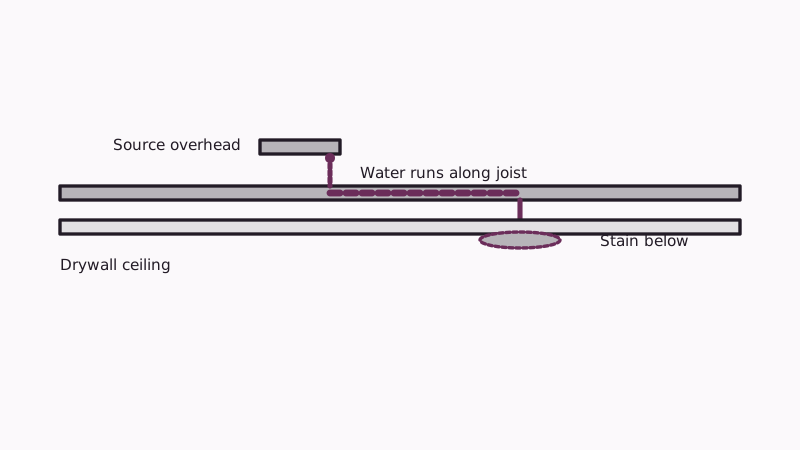
Water also travels. It can run along a joist, a pipe or the top of the drywall before it drops, so the source may sit several feet away from the stain, usually uphill of it.
Could it be condensation instead of a leak?
Yes. Cold pipes, ducts and poorly insulated surfaces in an attic or wall cavity collect moisture on warm days, and it can drip onto the ceiling below without any plumbing failure. Ductwork above the stain with missing or damaged insulation is a classic cause.
Condensation tends to follow a schedule: it shows up in humid weather or when the system runs, and fades afterward. If the stain tracks the air conditioner, have the condensate pan, line and duct insulation looked at by a heating and cooling contractor. If it tracks a pipe, a plumber can add insulation or find the leaking joint.
Water that sits on a ceiling can also encourage mold. Speed matters: EPA notes that materials dried out within a day or two usually stay mold-free, which is why finding the source quickly pays off.
How do you find the source of a hidden leak?
Start with the room above. Look under sinks, around toilets, tubs and the washing machine, and check the ceiling and walls for matching marks. Read the water meter with every tap and appliance off, come back in two hours for a second reading. A moving dial means there is a leak somewhere in the supply system.
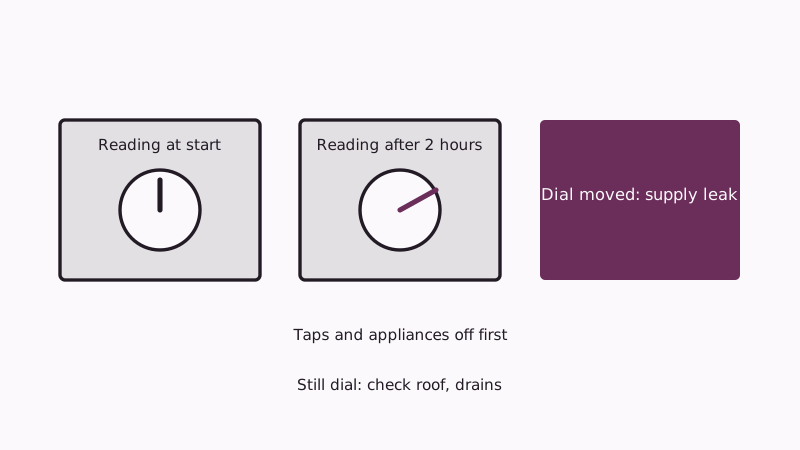
That meter test is EPA's own, and the agency estimates that a typical home loses more than 9,300 gallons a year to leaks. If the meter stays still, the source is probably roof, condensation or drainage rather than a supply pipe. Drain leaks show only while water flows, so run the suspect fixture for a while and see whether the stain reacts.
If the leak hides in a wall cavity or above the ceiling, a plumber has listening gear, thermal imaging and a moisture meter to trace it without tearing everything open. What it costs is covered on the leak detection cost page.
What can you safely do today?
Put a bucket under the stain if there is any chance of water, mark the outline, and keep checking. With a wet or growing stain, close the water at the suspect fixture or at the main and ring a plumber. If the ceiling is sagging, soft or bulging, stay out from under it.
Do not paint yet. A stain painted over before the source is fixed comes back, and fresh paint hides the evidence you need. Once the area is fully dry and the cause fixed, a shellac-based stain-blocking primer is the usual choice, because water-based primers can let the brown bleed through within weeks.
Treat a bulging ceiling as an emergency: it stores a surprising amount of water, and wiring or a light fixture may be close. Our ceiling water leak guide has the steps for an active leak.
When is a stain with no leak a sign of something worse?
Suspect something slow and hidden if the stain returns after painting, creeps outward, sits below a bathroom or kitchen, or brings a musty smell. A weeping pipe or a failing drain could be behind it. A hidden pinhole in a supply pipe can weep for months before it drips. In the worst case it ends as a burst pipe.
Older houses are more prone, because pipes age. Galvanized or early copper lines in older Anaheim, Fullerton and Orange houses corrode and leak at joints, and the leak may be inside a wall. The warning signs are in why pipes burst and the burst water pipe guide.
Bring in a professional for a wet or spreading stain, one below a bathroom, anything with an odor, or mold across more than roughly 10 square feet. EPA suggests getting an experienced professional for large mold areas or contaminated water.
Common questions
Is it possible the stain is just old?
Yes. If a leak was fixed long ago and the stain is dry, firm and unchanged for weeks, it is cosmetic. Confirm with a moisture check, then prime and paint. If it ever darkens or spreads again, treat it as active and look for the source.
Can an air conditioner cause a ceiling stain?
Yes. A clogged condensate drain, a cracked drain pan or poorly insulated cold ducts can wet the ceiling below, especially in warm months. If the stain grows when the system runs, have a heating and cooling contractor check the drain line and insulation before painting.
How fast can a damp ceiling turn moldy?
According to EPA, mold generally does not take hold if wet materials dry out inside one to two days. A stain that stays damp longer can grow mold on the back of the drywall, where you cannot see it. A musty smell is a warning, so act early.
Should I cut into the ceiling to look?
Not on your own. A bulging ceiling is heavy with water and may be near wiring, so stay clear and phone a plumber. Otherwise leave it intact, since a moisture meter or an infrared camera can see behind the paint with no cutting.
Will home insurance cover the damage?
Often for sudden and accidental water damage, but not for long-term seepage or neglect. Document the stain with dated photos, fix the source promptly and ask the insurer before repairs. The insurance and burst pipes page lists questions for your insurer.
For the wider picture, start with plumber in Anaheim.
Sources
- EPA, a brief guide to mold, moisture and your home
- Published guides on ceiling water stains, restoration and inspection sites, checked November 2026
- EPA WaterSense, Fix a Leak Week
Last updated