Plan for the weather you actually get. January lows in Anaheim average roughly 48 or 49 degrees, and freezing nights are close to unheard of, so a lived-in mobile home rarely needs a full drain-down. The risk is the cold snap that catches thin pipe under the floor, or a home left empty for weeks. The Citrus Belt home page shows the rest of the service, and a visit begins on the quote page. Below: when to winterize, how, and what the system under your home looks like.
Does a mobile home in Anaheim need winterizing at all?
For an occupied home, usually not beyond basics. Lowland Orange County has about one frost night in a year at most, so the plan is to keep the heat on and cover vulnerable pipe. A home that will stand empty for a stretch, or one in a hillside or higher-elevation spot where nights run colder, deserves a proper drain-down.
The vulnerable spots are the same everywhere:
- supply pipe in the crawl space under the floor, particularly near the skirting vents
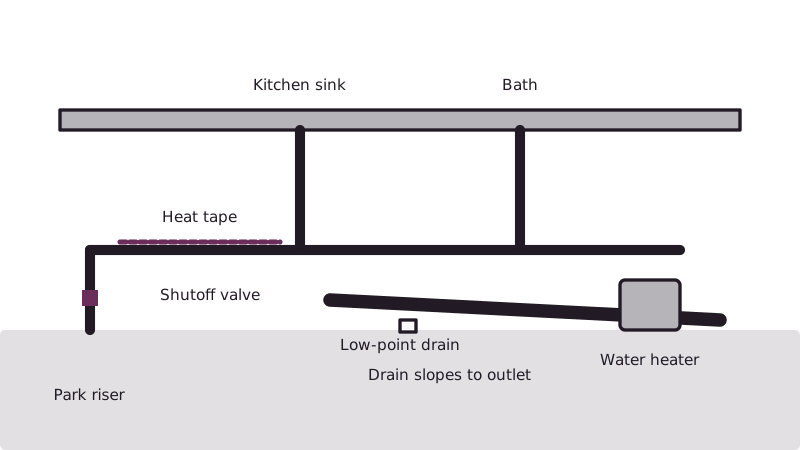
- the water line running from the park riser to the home
- hose bibs and any exposed shutoff valve on the outside wall
- the water heater's cold inlet and its relief line
A cheap thermometer on the underside of the home tells you more than the forecast does. If it reads in the 30s, add protection.
How do I winterize the plumbing for a vacant home?
Shut the supply at the valve nearest the street, open every faucet, and let the lines run dry. Blow the remaining water out with a small air compressor on low pressure, drain the water heater, and put non-toxic RV antifreeze in each trap, the toilet bowl and tank, and the washer standpipe. Skip car antifreeze, which is poisonous.
Order of work, working from the water source inward:
- Close the main supply and drain the line to the home.
- Open the low-point drains under the floor if your home has them.
- Drain the water heater, and shut off its gas or breaker first.
- Run compressed air through the supply lines, one fixture at a time.
- Pour antifreeze in traps, which hold water that would otherwise freeze or evaporate.
- Disconnect the washer hoses and the ice maker line.
If the water heater will stay in use, install a bypass so the tank does not fill with antifreeze. When you come back, flush the lines until the water runs clear and check every valve for drips before you leave the home alone.
What does heat tape and insulation do?
They keep a continuously occupied home safe on the rare cold night. Self-regulating heat tape, plugged into a GFCI outlet, switches on near freezing and warms the pipe it is wrapped around. Foam sleeves go over the tape. Choose a tape rated for plastic pipe if your supply lines are plastic.
Equipment that is meant for outdoor and crawl-space use matters here. A household extension cord and a bare heating wire are a fire risk. Thermostat-controlled tape with a UL listing, installed per the maker's directions, is the safe option. Keep the skirting intact too: gaps let wind sweep the underside, and the pipe loses warmth faster than most owners expect.
Close up vents partly on a cold snap, but never fully if a furnace or water heater draws combustion air from under the home.
What does the pipework under a manufactured home look like?
Supply water enters from the park or lot connection at a riser, passes a shutoff valve, and runs through the belly or crawl space to the kitchen, bath and heater. Drains slope toward a single outlet that joins the park sewer connection. Vent pipes carry air from the drain lines up through the roof. Most homes follow this simple pattern.
Because of the thin floor and the open space underneath, nearly everything is reachable from below, which keeps repairs cheaper than in a slab house. The trade-off is exposure to weather and animals. Gray polybutylene went into many homes of the late seventies through the nineties and has a reputation for failing; signs to watch for are in the guide to replacing polybutylene. Newer homes more often use PEX.
A rough sketch of your own layout is worth making, with the main shutoff, water heater, each fixture and each cleanout marked, so anyone helping you can find things fast.
What are the roof vents and caps for, and how do I inspect them?
Without air behind the water, drains glug and slow down, and vents supply it while carrying sewer gas out over the roofline. A cap or flashing boot keeps rain and animals out. Gurgling, sluggish flow at more than one fixture and a sewer odor indoors suggest a vent is blocked, cracked or missing its cap. Look at the roof opening for cracks and nesting debris.
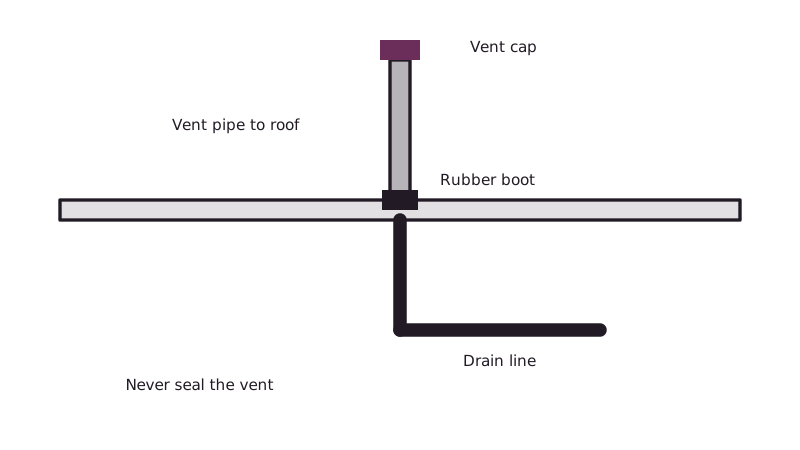
A rubber boot around the vent pipe dries out in the Southern California sun and splits, letting rain into the ceiling. Replace the boot before it leaks. Roof work on a mobile home needs care, since the roof structure is lighter than a site-built house, and a plumber or roofer should do it if you are not confident. Some homes use air admittance valves under sinks instead of a roof vent for certain fixtures, and those valves can wear out and leak odor.
Do not cap or seal a vent in an attempt to stop a smell. That makes drains worse.
Who handles repairs, and who needs a permit?
The plumbing inside and under the home, and in the park's lot, may be overseen by different agencies. The state's housing department (HCD) handles alterations to mobilehomes, and it inspects parks in places where the city or county has not assumed that role. Before replacing pipe or moving a fixture, ask the park management and HCD whether a permit applies.
A maintenance plumber's job is looking after existing systems: leaks, slow drains, worn valves, heater problems, thawing after a cold snap. For a mobile home that includes belly repairs, replacing a section of pipe, and checking the connection at the lot. Describe what you see under the floor when you request a visit, and a local plumber will come out to look.
Common questions
What goes wrong most often with mobile home plumbing?
Leaks at fittings under the floor, failing polybutylene lines, slow drains caused by low slope, dried-out vent boots and loose connections at the park hookup. Most are visible from underneath. Water stains on the belly wrap, a spongy floor or a rising water bill are the usual first signs of trouble.
Can I fix mobile home plumbing myself?
Small jobs, yes: replacing a faucet, a trap or a flexible supply line. Anything that alters the plumbing system of the home may need a permit from HCD, and gas lines, water heaters and the main line belong with a trade professional. Check with the park before cutting into pipe on the lot side of the shutoff.
How do I insulate pipes under a mobile home?
Wrap exposed supply pipe with foam sleeves or fiberglass, tape the seams, and add thermostat-controlled heat tape under the wrap if the pipe is vulnerable. Seal gaps in the skirting and belly wrap so cold air cannot sweep across the pipe. Do not bury heat tape in loose insulation without following the maker's instructions.
How many hours does a winterizing job take?
A single-wide with a plumber and a compressor usually goes quickly, a few hours at most, but time depends on access and how many fixtures there are. The count of drains, hose bibs and appliances drives the work. Have the quote written against your fixture list rather than a flat guess.
Sources
- Current Results, Anaheim average temperatures by month
- California HCD, Manufactured and Mobilehomes (alterations, permits and park inspection)
- Winterization guides from mobile home suppliers and plumbers (drain-down, antifreeze, heat tape), checked November 2026
Last updated