A puddle is a bad moment for detective work. Close the house main, commonly found at the front of the property or by the heater, then crack the lowest faucet to bleed off pressure and start mopping. Cause comes second. For a burst, or a leak with no visible source, the burst pipe plumber page sets out the emergency steps.
What are the first steps after spotting a leaking pipe?
Stop the flow at the main. If water is close to outlets or appliances, cut power at the panel as well, but only from a dry spot. Let the pipe empty through a low faucet, carry belongings out of the soaked area, and photograph everything for the insurer. A small drip is no reason to wait, since it can become a burst.
Find the main valve before you ever need it; five minutes is enough. Never wrestle with a valve that sticks or drips when turned, because old ones snap. Many houses also carry a utility valve at the meter. That one is the water utility's property, so contact them if the house valve is out of reach.
How do I track down the source of a leak?
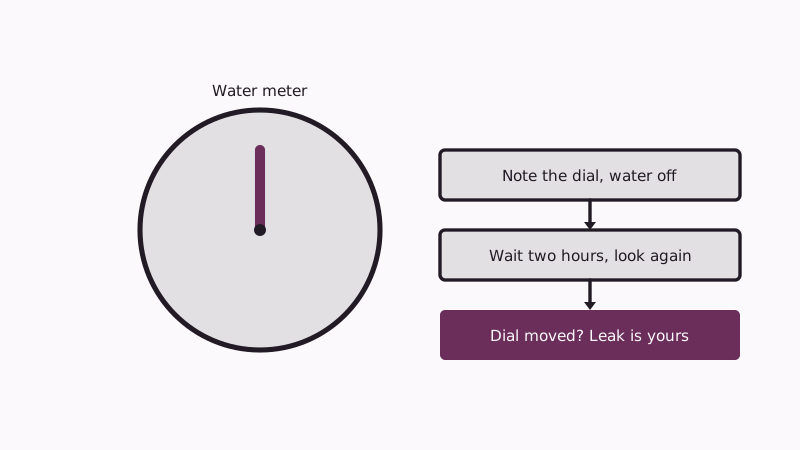
Hunt for stains, blistering paint, spongy drywall, wet carpet or a mildew smell, then trace the damage uphill, because water runs downhill from where it starts. Check beneath sinks, behind each toilet, near the heater and along washer hoses. A hidden leak shows up in the meter: note the dial, keep all water use off for two hours, and look again.
The EPA describes that two-hour test and says leaks cost the typical household 9,300-plus gallons yearly. Closing the main and watching the dial settles where the loss is: if it stops, the loss is on your property side of the meter. Slab and in-wall pipes need detection equipment, discussed under slab leak detection.
What kinds of leaks can I fix myself?
Easy wins include a loose compression nut below a sink, a washer hose, a toilet supply line, a drip at a fitting you can see, or a pinhole within reach. Tighten, swap the part, or clamp it. Anything within walls or slabs, on the main line, or touching gas or electrical work calls for a tradesperson.
Below a sink, close the stop valve, dry the joint, snug it a quarter turn and replace tired washers or the full supply hose. For a weeping joint read about mending a weeping joint and leaks under a sink. Tiny copper holes are covered separately in copper pinhole repair.
How is a leaking pipe repaired for good?
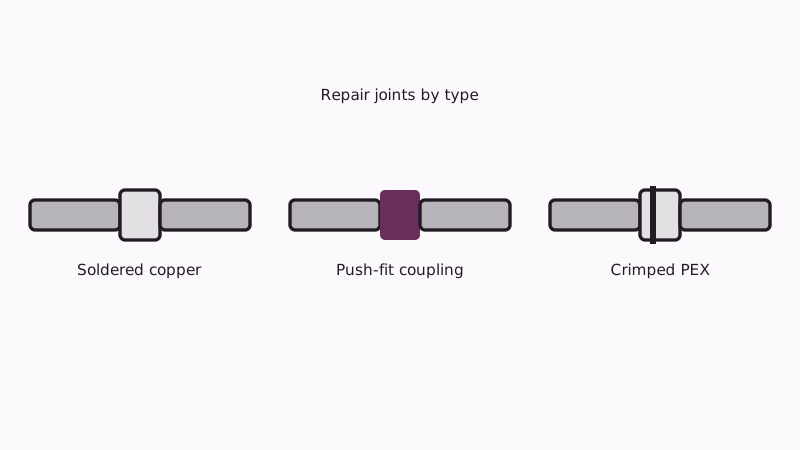
A lasting repair replaces the damaged section instead of covering it. The plumber cuts out the bad length and fits new pipe with proper fittings: soldered or push-fit copper, glued PVC or CPVC, crimped PEX. Clamps and putty are stopgaps. A pipe corroded over a long stretch should be replaced, not patched repeatedly.
Material changes the method. Galvanized steel, still found in some older Anaheim, Fullerton and Orange houses, rusts from the inside and leaks at threaded joints, so repair often means replacing a longer run; see galvanized pipe replacement. When leaks keep coming back, repiping may beat repeated repairs, and repipe a house lays out that choice.
How much does leaking pipe repair cost?
HomeGuide's 2026 figures for burst pipe repair run from $400 to $2,000, with labor making up around 80 percent. A second guide stretches the range from $200 to $3,000. Access sets the price: exposed pipe costs least, in-wall work more, and slab or long runs most. Both are guides, not quotes.
Drying out and rebuilding drywall, flooring and insulation can outweigh the pipe fix itself, so treat cleanup as its own line. Ask whoever quotes the repair who opens and closes the wall. Hourly pricing is explained in hourly rates for plumbers.
Why do pipes leak in the first place?
Usual suspects are corrosion, high pressure, age, joints that loosen or fail, freezing, roots reaching outdoor lines, and ground movement from settling or earthquakes. Pressure beyond 80 psi strains fittings, and scale adds wear. The City reports about 18 grains per gallon for Anaheim, which counts as very hard.
Lots on hillsides in Anaheim Hills and Yorba Linda can shift gradually, and the postwar tract houses of Buena Park, La Habra and Placentia often hold pipe of the same vintage, so a first leak may not be the last. Testing the pressure and identifying the pipe material both help. Local notes sit on the Anaheim Hills page.
How do I clean up and avoid mold after a leak?
Pull out standing water, then dry the space until nothing is damp. The EPA advises repairing plumbing leaks promptly and drying every item, since mold advances the longer moisture lingers. Remove soaked insulation and drywall, place fans and a dehumidifier, and bin ceiling tile that has gone moldy.
Once mold covers more than roughly ten square feet, or the soaking is extensive, the EPA directs you to its remediation guidance. Sewage-tainted water calls for professionals. Photograph before cleaning, hold on to receipts, and ask your insurer about sudden-leak coverage; see burst pipe insurance.
When does this stop being a homeowner repair?
Hand it over if water is coming from behind a wall, a ceiling or the slab, if corrosion runs along the pipe, if the main refuses to close, if water has reached electrical equipment, or if an earlier fix failed. A tradesperson finds the cause, makes the repair, and inspects the rest of that run.
Send in the quote form and a visit nearby follows, with the figure in writing before anyone starts. A permitted job has to use a contractor with a California license; the state board site lets you verify the number. Our home page lists the cities we cover.
Common questions
Can a leaking pipe wait until morning?
Only once the water is closed off to it and the area is dry. A pipe that keeps running, or one inside a wall, cannot sit overnight, since damage compounds fast. Closing the main buys time. Expect after-hours calls to cost more.
Will tape or putty fix a leaking pipe?
They slow a small leak briefly, nothing more than that, and the repair is only temporary. Pressure, pipe condition and surface prep decide how long. Schedule a real repair soon, look at the spot daily, and never use a wrap to conceal a pipe inside a wall.
What if the leak is hidden from view?
Look for a meter that moves when all water is off, a bill that jumps, the sound of running water, damp spots, or warm patches on a floor. The EPA's two-hour meter test is a reliable first check. A plumber can pinpoint the location with listening and detection tools.
Is a leaking pipe covered by homeowners insurance?
Depends on the policy. A sudden event is commonly covered; the pipe itself, or damage from a slow drip over months, often is not. Read the terms, photograph everything, and phone the insurer before major repairs. Written findings from the tradesperson can support a claim.
Is a permit needed to fix a leaking pipe?
Minor repairs typically skip it, while a bigger run, a main line or work behind finished walls may not. Cities differ, so ask the Building Division. If one applies, the work must go to someone with a California contractor license.
Sources
Last updated