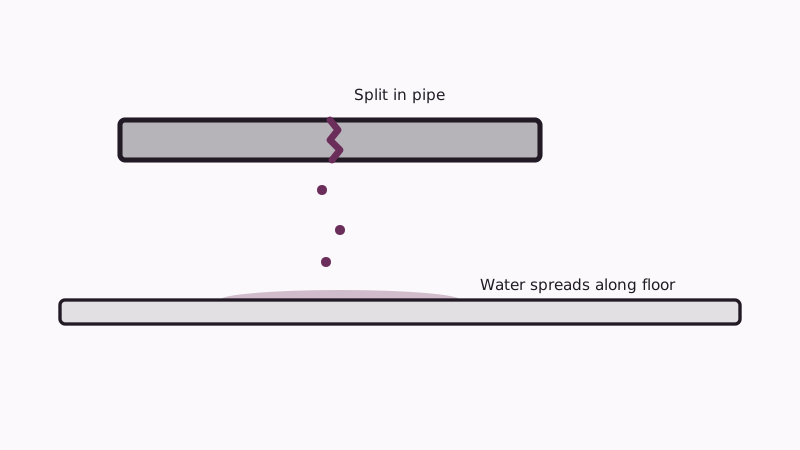
A burst pipe rarely hides for long. Somebody hears a rush behind drywall, spots a damp stain creeping across a ceiling, or notices the shower has gone feeble. Any one of those is enough to go and find the main shutoff before you read further. What follows covers the symptoms, a simple meter check that settles doubt, and a few ways to hold a small leak until a plumber arrives. When the water is still running, the burst pipe plumber page describes how a local plumber gets sent to you.
Which symptoms point to a split or burst line?
Water where none belongs, a sudden fall in pressure at several fixtures, and a hiss or patter inside a wall, floor or ceiling are the strongest symptoms. An unexplained jump on the water bill adds weight. A single symptom is only a lead, but two at once should send you to the shutoff.
Here is where to look, roughly in order of how often each one turns out to matter:
- Listening. In a silent house with nothing running, a faint hiss or trickle is water escaping under pressure.
- Ceilings and walls. Brown rings, blistered paint, soft drywall, or a damp smell in a closet.
- Flooring. Cupped hardwood, laminate that lifts at the seams, or a cool wet patch on tile.
- The water itself. Rust-colored or cloudy flow from taps after a quiet period can come from damaged piping.
- Pressure. When every fixture weakens together, suspect a break upstream of the branches.
Can a meter reading prove it before I cut into anything?
Yes, and it takes about two hours or a minute, depending on the meter. Stop all water use, jot down the dial, leave the house alone for two hours and look again. A dial that has crept forward, says the EPA, points to a leak. Some meters carry a small spinning triangle that shows even a trickle within a minute.
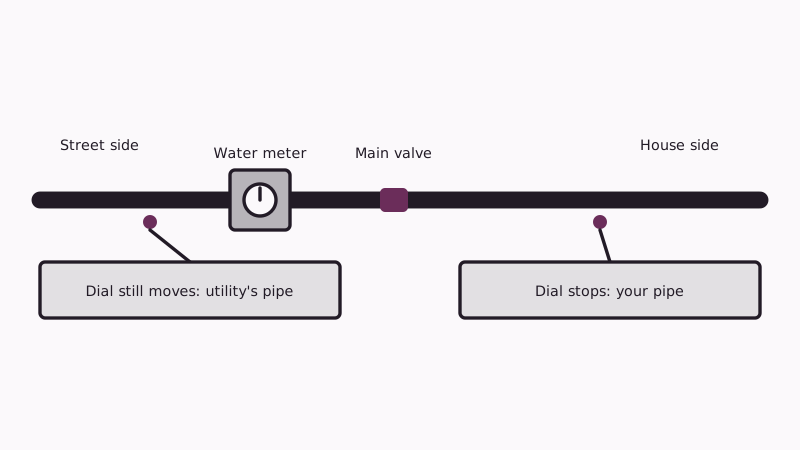
Now repeat the check with the main valve shut. A dial that keeps turning even then means the loss is upstream of your valve, which makes it the water provider's business. If the dial stops, the trouble sits in your own pipes.
Before blaming a pipe, rule out the toilet, which fools plenty of people. The EPA's test: tint the tank with food coloring, then leave the handle alone and come back in ten minutes to inspect the bowl. Any tint there means a worn flapper is the culprit and the part costs little.
Hidden lines call for leak detection: a plumber using acoustic microphones or thermal imaging can often pin the location down to a patch of floor a few feet across before drywall is touched. Our guide to slab leak detection and repair shows what that involves under a concrete floor.
What if the break is below the floor?
Under a raised floor, look for pooled water, dripping joists, soggy insulation and soil darker than its surroundings. On a concrete slab the hints are warm spots underfoot, running water noises with the house quiet, and a dial that never settles. A lot of Anaheim, Fullerton and Orange homes are built on slabs, so a warm patch deserves attention.
Stay out of the crawlspace if water sprays near wiring. Close the main, then ring a plumber, and treat any damp spot near a panel, outlet or fixture as potentially live. In older neighborhoods the supply may be galvanized steel or aging copper, and either can let go at a joint or corrode from the inside. For the reasons behind failures, see why supply lines fail.
Water is already spreading: what is the first move?
Shut the main. Next, open whichever faucet sits lowest in the house so the line empties. If the water heater is easy to reach, turn it off as well. Carry electronics, rugs and boxes out of the damp zone, and photograph each item before you tidy up, because the insurance adjuster will ask for pictures.
Houses here usually have the main by the street, inside the meter box or against an outside wall near the heater. Ball valves close with a quarter turn. An old gate valve needs several full rotations and can be seized after decades untouched. Test yours on a quiet afternoon, not mid-flood.
After that, in this order:
- Kill the breaker serving any room with standing water, provided you reach the panel without wading.
- Soak up the worst with towels or a wet vac.
- Open windows and set fans going.
- Call a plumber. Say where the wet spot is and whether the dial still moves.
If you want someone sent quickly, the page on urgent help with a burst pipe is the place, and the quote form works too.
Is there a temporary patch for a pinhole leak?
For an accessible copper or plastic pipe, close the supply, wipe the pipe dry and choose one of three stopgaps: a rubber-padded clamp, silicone tape that bonds to itself, or putty made for wet service. Each is a short-term measure. A pinhole generally means the wall of the pipe is thin along some distance, so expect it to return.
The clamp holds best. Match its size to the pipe, seat the pad squarely on the hole, then snug the bolts in small alternating turns. Tape and putty need a clean, completely dry surface, which is hard to get on a wet line. Duct tape does nothing against line pressure.
Copper that keeps springing new holes is a pattern, and pinhole leaks in copper pipe explains it. Several pinholes in one house usually mean it is time to price replacement.
How can a threaded joint stop weeping without being taken apart?
A weeping threaded fitting can sometimes be slowed with two-part epoxy putty or a repair wrap. The lasting cure is still to unscrew it, scrub the threads and rebuild with new thread tape or pipe dope. Cranking harder on a weeping fitting tends to crack it, so a drip becomes a jet.
If you try the stopgap, shut off and drain the line, clean the joint, work putty into the thread gap and give it the whole cure period listed on the label before the pressure comes back. Then book the proper repair. The longer walk-through on mending a leaking pipe joint covers the permanent route. Gas fittings are a separate matter: nobody should patch those at home.
When does the job belong to a plumber?
Pass it on when the leak is buried behind plaster or concrete, when you cannot trace it, if several spots weep, or if the shutoff refuses to close. The state licensing board files plumbing under classification C-36. Once labor plus materials reach $1,000, only a contractor holding a California license may take the job.
The repair itself might mean cutting out a stretch of pipe, joining in new material and closing up the drywall. Larger replacements can need permits that each city handles through its Building Division, so the plumber should check first. If an insurance claim is coming, ask for a written note of the cause and the work done. Afterward, burst pipe prevention lists habits that make a second break less likely.
Common questions
How quickly does water damage set in after a break?
Within minutes. Even a half-inch line sends out gallons every hour, and drywall and insulation soak it up. Materials left damp for a day or two can begin growing mold. Closing the main and drying the area promptly counts for more than any other single step.
Can a pipe fail silently?
Yes. A slow failure behind plaster, or beneath a concrete floor, may make no noise whatsoever. The quieter clues are a meter that creeps, a higher bill, a warm floor patch or a musty smell. With no sound but a suspicion, start with the meter test.
Why does the EPA leak figure matter to one house?
EPA figures show a typical household loses more than 9,300 gallons to leaks over twelve months. Your house may leak more or less, but the number shows how a small drip compounds across months. A leak you ignore keeps costing money even if it never floods a room.
Is the utility responsible, or do I phone a plumber?
Shut the main, then check the meter. If the dial keeps turning, the leak sits upstream and the water provider owns the problem. If the dial halts, the pipes are yours, which means a plumber gets the call. Let the dial settle the argument for you.
What does a burst pipe repair cost?
Location, material and the amount of wall or floor that must be opened set the price. An exposed copper run is far cheaper than one beneath a slab. Expect a written quote once the damage has been seen, and start on the quote form.
This guide is one of many on plumber anaheim.
Sources
Last updated