Three habits stop most bursts: knowing your main shutoff, keeping water pressure under the code limit, and retiring old pipe before it quits. If one lets go anyway, the first-response steps sit on burst pipe plumber. Freezing barely figures in Anaheim, Fullerton and Orange, so this page deals with what does fail here: aging supply lines, corroded fittings, excess pressure and leaks nobody has spotted. A twenty-minute walk around the house catches the worst of it.
Where should I start if I want to prevent a burst?
Start with the main shutoff. Find it, confirm it turns, and tell everyone who lives there. A burst stopped within a minute or two is a cleanup job, not a disaster. A valve untouched for twenty years often seizes, so test it now and have a plumber swap it if it will not close.
Walk the property once. The main often sits on the front wall or in a box by the sidewalk, and the water heater has its own valve on the cold inlet. Hang a tag on each. Learn the small angle stops under sinks and toilets as well, because a split supply hose is a very common indoor leak.
Put the valve locations in a phone note. Renters should ask the landlord which valve serves the unit.
How high is too high for home water pressure?
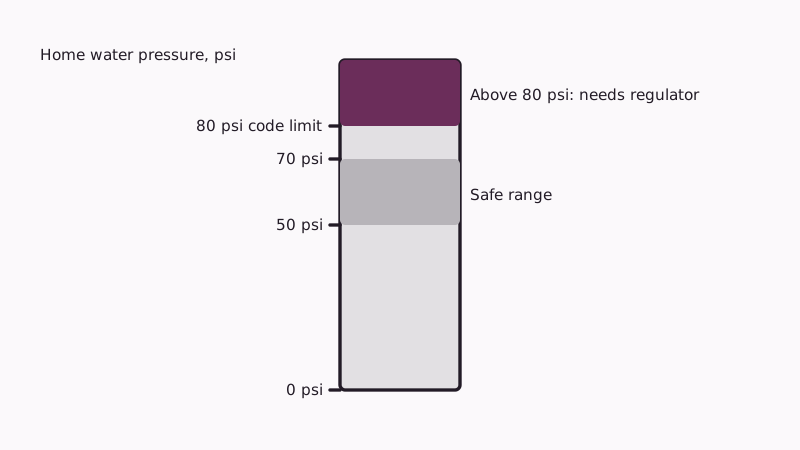
The California Plumbing Code caps pressure at 80 psi where water is used, and requires a regulator beyond that. A water district in San Diego County, Padre Dam, says normal indoor pressure runs 45 to 65 psi. Anything above strains every joint, fixture and hose, and it quietly shortens their life.
The hardware store sells a gauge that screws onto a hose bib. Take the reading at dawn or after dark, when the neighborhood uses little and pressure is highest. Lots on the low side of a slope, as in parts of Anaheim Hills and Yorba Linda, can read higher. Above 80, the regulator needs adjusting or replacing: see adjusting the regulator and the regulator installation cost. Padre Dam notes that pressure problems past the meter belong to the owner.
Which pipes in an older house should I worry about most?
Galvanized steel, polybutylene, and thin or pitted copper. Plenty of Anaheim, Fullerton and Orange homes built before 1970 still carry galvanized supply lines, which clog with rust from within and give out at threaded joints. Polybutylene, a gray plastic found in some 1970s and 80s houses, has a poor record at its fittings. Both are replacement candidates.
Warning signs: brown water first thing after a quiet stretch, weak flow at several taps, green crust on copper joints, damp drywall. See galvanized pipe replacement and polybutylene pipe replacement. A full repipe is a bigger job, but it ends the cycle of patching, and our guide on why repiping a house makes sense explains when it pays.
How do I find a leak before it turns into a burst?
The meter can tell on a leak. Stop all water use, sprinklers included, and watch the little leak indicator. A turning dial means water is escaping. Across the country, says the EPA, a home typically loses over 9,300 gallons a year this way, and most leaks start small. A bill that creeps upward is another hint.
Look at the usual spots: beneath sinks, behind the toilet, beside the water heater, at the washing machine hoses, under the dishwasher. Swap rubber hoses for braided stainless every few years. If the meter moves and nothing shows, a plumber's Leak Detection gear can trace a drip inside a wall cavity or beneath the slab; leak detection cost shows the price range. A silent leak also explains high water bills.
Why do pipes burst in the first place?
Excess pressure, corrosion, plain age, a bad fitting and, now and then, ice. Hard water leaves scale that narrows pipe and uses up a water heater's anode rod. Water hammer, the slam when a valve snaps shut, hammers on joints. Each leaves a pattern you can notice early.
The longer list lives in why pipes burst; water hammer sounds explains the knocking, and hard water scale prevention covers buildup. A plumber can often quiet knocking with an arrestor, or by checking pressure and pipe straps.
Is freezing a real risk for pipes around Anaheim?
Seldom, though not never. The North Orange County flatlands rarely see sustained freezing, but a cold snap can still catch exposed hose bibs, irrigation backflow assemblies and lines in unheated outbuildings, and the higher lots in Anaheim Hills and Yorba Linda are a little more exposed. Cheap insulation covers handle it.
Foam sleeves on exposed pipe and a cover over each hose bib are enough for most households. Unhook hoses ahead of a cold night, and keep the garage door shut. Away for a winter trip? Leave the heat on low.
Should I install an automatic shutoff valve?
It can pay off where a burst would do serious damage, such as a second-floor laundry or a house left empty for weeks. These valves detect unusual flow or a leak and close the main on their own. They cost money and need a plumber to fit them on the supply line, so weigh the price against the cost of a flood.
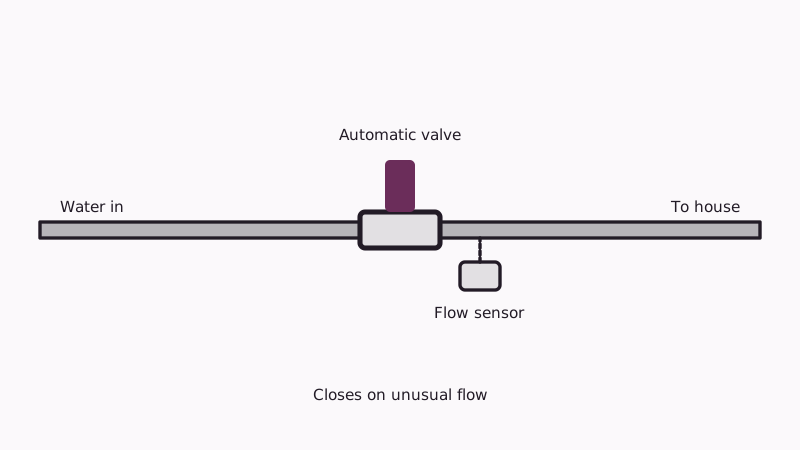
Ask a plumber to explain how a given model detects problems, whether it needs power or Wi-Fi, and how it resets. Some insurers offer a discount, so ask yours. Skip any product that promises to replace regular checks.
Common questions
Can I do a prevention check in an afternoon?
Your own pass with a gauge and a meter test fits in half an hour. A plumber's pass over fixtures, shutoffs and exposed pipe scales with the size of the house, while tracing hidden leaks is extra time with its own quote.
What should a plumber's prevention visit include?
A useful visit tests pressure, exercises the old shutoff valves, looks at supply hoses, the water heater connections and visible pipe, and prices any regulator or valve swap. Get the price on paper, and verify the license number if the job will reach $1,000.
Is the water shut off during a visit?
Briefly, when the plumber tests valves or swaps a fitting. Somebody needs to be around to open up the main valve, the heater and the fixtures. Mention any problem spots you already know about before work starts, so the plumber looks there first.
Are pipes in a wall more likely to burst?
Not by location alone, but a burst inside a wall is more costly because the leak goes unseen. Pipe age, material and pressure matter more. Keep an eye out for damp drywall, peeling paint and musty smells, which are early signs of a leaky pipe in a wall.
Want a visit or a price? Details go on the quote page, and the Citrus Belt Plumbing home page lists everything else.
Sources
Last updated