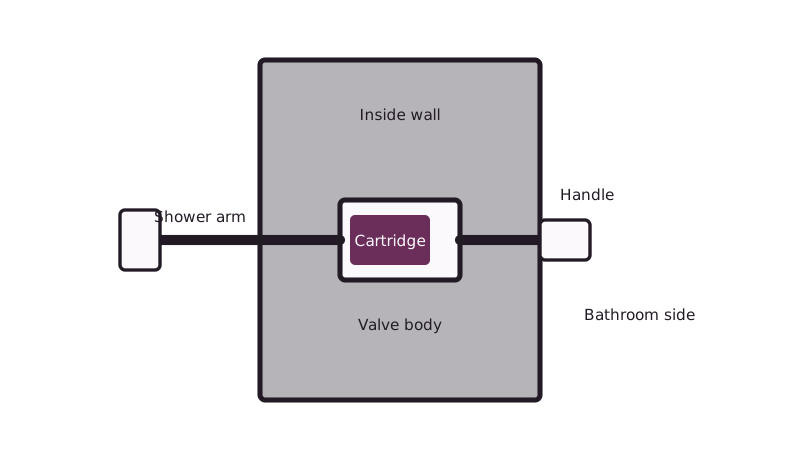
A drip at the showerhead looks minor and adds up. By EPA arithmetic, a showerhead leaking ten drops a minute wastes upward of 500 gallons yearly, while a faucet with one drip each second wastes upward of 3,000. Fixtures like shower valves, kitchen faucets and disposals are the bread and butter of the fixtures and disposal installation side of our service, and a shower valve rebuild is among the more accessible repairs. Not keen on tackling it? Use the quote page to line up a visit.
Where is my shower leaking from?
Name the spot first. Drips from the showerhead long after the handle is off mean the valve in the wall is not closing. Water at the tub spout while the shower is running blames the diverter. Wetness around the handle suggests a tired O-ring or packing, and damp patches elsewhere on a wall or ceiling suggest a supply pipe instead.
Watch the drip for a minute with the shower off. A constant stream from the head is a valve fault. Only a slow bead of water that stops after a while can simply be the pipe draining. Run a hand under the spout, the escutcheon plate and the head to find where water appears.
A brown patch on the ceiling under the bathroom belongs to another problem. Park the valve for now and begin with ceiling water leaks.
What type of shower valve do I have?
Four types cover most homes: a compression valve with separate hot and cold handles, a single-handle cartridge valve, a ball-type single handle and a ceramic disc valve. Two handles usually mean compression washers. One handle that slides and rotates suggests a cartridge, and a handle that moves in a circle over a dome suggests a ball.
Compression valves are common in older Anaheim, Fullerton and Orange homes, and wear out the rubber seat washer. Newer houses have cartridge or pressure-balancing valves. Pull the handle cap and look at the stem. A brand name or model number on the trim helps you find the right part, and many manufacturers publish diagrams.
Can't tell? Photograph everything and take the old part to a hardware counter. Matching a cartridge by sight is unreliable.
How is the worn cartridge or washer exchanged?
Shut the supply, strip off the handle and trim, extract the old part and install its twin. Begin at the shutoff for the bathroom or the whole house, then open the shower to bleed off pressure. A rag over the drain catches dropped screws. Pry off the cap, back out the handle screw, lift away the plate and slide out the cartridge or washer.
For a cartridge, a retaining clip or nut often holds it, and a puller tool may help. Note which way the cartridge faces before you take it out, since reversing hot and cold is a common error. On a compression valve the sequence differs: unscrew the stem, put on a new rubber washer and run a fingertip over the brass seat to feel for pitting.
Reassemble in reverse, bring the water back gradually, and run the shower to test. Check for drips at the handle too. Similar parts turn up in repairing a leaky tub faucet and in the general guide to stopping a dripping faucet.
Why does my shower valve wear out so fast in Anaheim?
Hard water. Anaheim's utility reports roughly 18 grains of hardness per gallon, and that mineral load crusts cartridges, seats and screens. Scale stops seals from closing fully, which makes a drip, and it scores the brass and plastic surfaces. Showers see more heat and use than most fixtures.
Cleaning can postpone a repair. Soak a clogged showerhead in vinegar, and rinse a removed cartridge in vinegar for a few hours before you decide it is dead. In a house with very hard water, a softener or scale control prolongs the life of every valve. See preventing hard water scale.
A drip that keeps returning after new parts usually means the valve seat is pitted, and the whole valve body may need replacing.
What if the drip continues, or the leak sits inside the wall?
Should a drip survive the new parts, the valve body or its seats are damaged. Replacing a shower valve means opening the wall, either from the bathroom side or through an access panel from the back, cutting the supply pipes and soldering or connecting new ones. This is plumber work, and tile has to be repaired afterward.
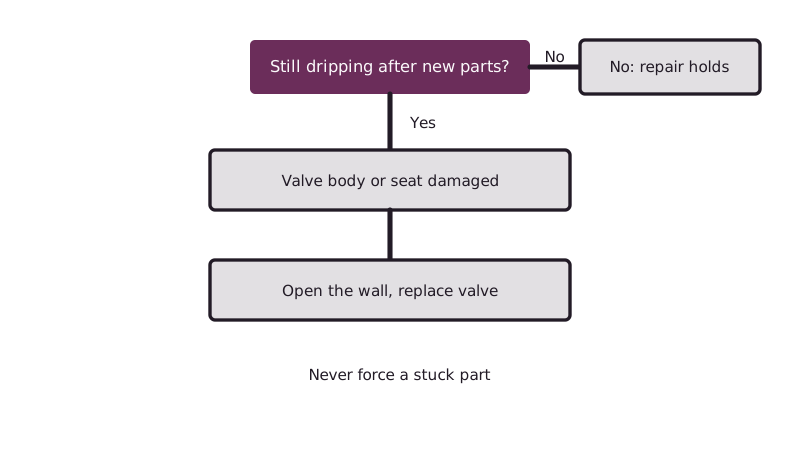
Other signs that point beyond DIY: a handle that spins without effect, corroded or seized hardware, stripped threads on a stem, or no shutoff for the bathroom so you must close the main. Leaks inside the wall from a joint or a pinhole need the same approach, and water stains on the ceiling or wall are a warning.
Hold off on forcing a stuck part. Cracking a valve body can turn a small drip into a flood. When in doubt, close the main and book a visit. Whoever comes out can say whether a cartridge, the whole valve or a pipe section is needed, and write the price down. Typical prices for fixture work are covered in faucet installation cost. The vanity side of the bathroom is covered by a leaky bathroom sink faucet, with other jobs listed on the Citrus Belt home page.
Common questions
Does the whole house need to be shut off?
Only when the bathroom lacks local stops, which is common in older houses; where they exist they hide behind an access panel or under the vanity. Close whichever you have, then run the shower until it dries up before touching a screw.
Why does it leak mainly with hot water?
Heat expands parts and can expose wear. A cracked washer, a scored seat or a failing cartridge may seal when cool but not when hot. Mineral scale also behaves differently across temperatures. Replacing the cartridge or washer, and cleaning the seat, usually cures it. If the drip persists, the valve body may be damaged.
Is a dripping shower a big deal?
The waste is genuine, and damage from a leak hidden in the wall can outrun the cost of the water itself. A drip at the handle can also wet the wall. Fix a drip early, since it rarely stops by itself.
How long does the repair take?
Allow a first-timer an hour or two for a cartridge or washer swap on a reachable valve, store run included. Replacing the valve itself takes longer, with tile or drywall repair afterward, so see that any estimate itemizes the wall work.
Sources
- EPA WaterSense, Fix a Leak Week (dripping faucet and showerhead figures)
- City of Anaheim, water hardness (about 18 grains per gallon)
- Manufacturer instructions for cartridge, compression and ball-type shower valves, checked November 2026
Last updated