Start under the basin. Close both little valves, put the plug in the drain so nothing small is lost, and photograph every step as the handle comes apart. Which part has given up, a cartridge, an O-ring, a washer or a seat, depends on where the water appears. Kitchen sinks with a disposal are a different animal, and the garbage disposal installation page deals with that corner of the plumbing. Here the subject is the bathroom vanity.
Which part is leaking: spout, handle, base or the cabinet below?
Read the water. Dripping from the spout tip means a worn seal inside the faucet. Wetness around the handle means a tired O-ring or a loose packing nut. A film at the foot of the spout means the spout O-ring. A damp cabinet floor means a supply line, a nut or the drain, not the faucet body.
A simple test narrows it down. Wipe all surfaces dry, tuck a strip of tissue by each suspect spot and let the water flow for sixty seconds. The first strip to darken names the culprit. Then close the wall valves. A spout that still drips has an internal fault, while a dry spout over a wet cabinet sends you below.
Do not shrug off a slow drip. The EPA arithmetic is stark: a drip every second loses over 3,000 gallons in twelve months. It also stains the basin and wears the seat faster.
Which kind of faucet is it?
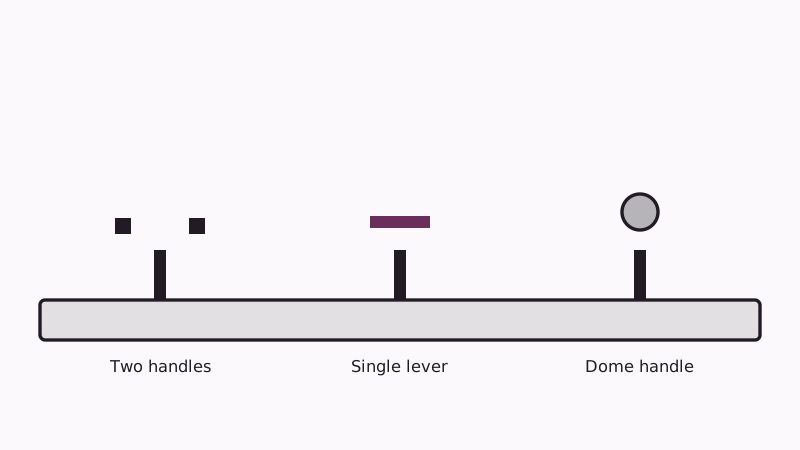
Look at the handles. Two of them usually means compression stems or two cartridges. A lone handle that swings every direction is typically a ball design, one that lifts and swivels is usually a cartridge, and a broad handle on a flat base suggests a ceramic disc. Each family wants different spare parts.
Compression is the oldest and uses rubber washers. Cartridge and disc styles dominate newer bathrooms. Ball faucets turn up mostly in kitchens. Unsure? Look for the brand on the faucet body or inside the cabinet, search for the model number, or bring the worn part to a plumbing supplier. Parts that look alike often are not, so buy only after you have the old piece in your hand.
What is the repair for a dripping spout?
Isolate the water, pop the decorative cap, remove the handle screw and pull the stem or cartridge. Replace whatever has worn with an exact match. That means a washer and seat for compression, a complete cartridge for most single-handle faucets, springs and seals for a ball model, and seals for a disc cylinder. Rebuild in reverse and reopen the valves gently.
How each family goes:
- Compression: unscrew the packing nut, pull the stem out, and fit a new washer on its tip. A pitted seat can be resurfaced or replaced using a seat wrench.
- Cartridge: release the retaining clip or nut, slide the cartridge out, then seat the new one facing the way the old one did. Hot and cold reversed? Rotate it 180 degrees.
- Ball: tiny seats and springs fail first, so buy the complete kit.
- Ceramic disc: take out the mounting screws and lift the cylinder. Worn underside seals are the usual cause, and scale can often be dissolved by soaking the parts in vinegar overnight.
Go gentle with ceramic. Over-tightening can crack a disc, and so can a rush of pressure, so crack the supply valves open slowly with the faucet handle left on.
How are leaks at the handle or spout base cured?
At the handle, nip the packing nut up by about an eighth of a turn. Still wet? Fit a fresh O-ring on the stem. At a swivel spout, lift it off, slide the worn ring out, smear a fresh one with plumber's grease and set the spout back. Wrap pliers' jaws in cloth so the finish is not marked.
These are the friendliest repairs, so begin with them. Keep screws in a saucer, and when a faucet is badly pitted and decades old, fitting a new one may make more sense than rebuilding.
Orange County water runs hard, and scale clogs aerators and scores ceramic parts. A soak in white vinegar now and then keeps them working longer.
What if water collects in the cabinet?
Check the flexible supply hoses and their nuts, then the drain parts. Dry each connection with tissue and run the tap. A damp nut may need only a snug quarter turn. A hose with a kinked or frayed braid should be replaced rather than tightened.
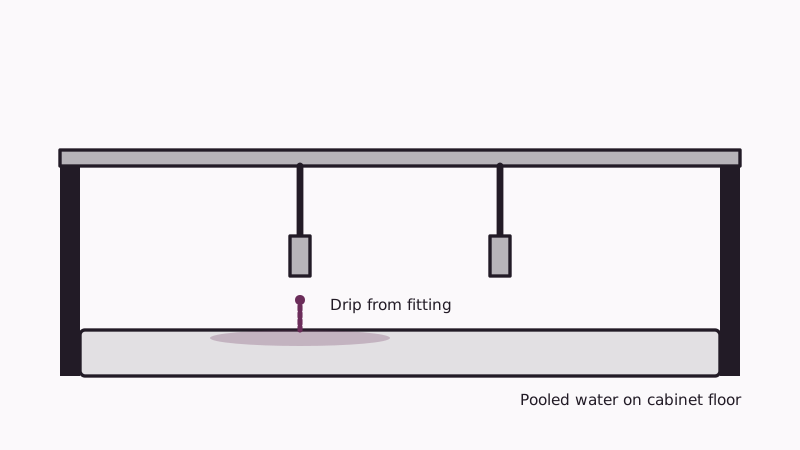
If water shows only when the basin fills or empties, the pop-up drain or the P-trap is the suspect. For the parts below the basin, read fixing a leaking pipe under a sink. A wall valve weeping from its own stem is a sensible moment to bring in a plumber.
Do shower and tub faucets work the same way?
Mostly yes, with one big difference: the valve lives inside the wall, so the trim comes off first and an access opening may need to be cut. We have separate walkthroughs for a dripping tub faucet and a dripping shower faucet.
A leaking shower valve can also soak the wall or ceiling behind it. Brown marks on the ceiling below? Try the page on stains that appear without a visible leak.
When is a call to a plumber justified?
Bring one in when the water refuses to shut off, a stem or wall valve is corroded solid, parts for the faucet are no longer made, the drip returns after a repair, or you suspect water running behind the wall. A plumber can also fit a new faucet outright when a rebuild is not worth it.
Ask for a price before work begins. A faucet job rarely nears the $1,000 point where California's contractor license rule starts. To get someone out, use the quote page, and see the home page for what we arrange around Anaheim and North Orange County.
Common questions
Why does it drip after I put in a new washer?
Usually the seat underneath is pitted and chews the new washer, or the washer is the wrong size. Cartridge and disc faucets have no washer at all, so they need a cartridge or seal kit. Confirm the type and inspect the seat before another attempt.
What is a plumber likely to charge?
Parts are inexpensive. Washers and rings cost little, and a cartridge costs a few dozen dollars. Labor depends on the plumber and the visit, so get a price in advance. Fitting a whole new faucet naturally costs more than rebuilding the old one.
Could I do it without closing the water?
No. First close the valves at the wall, then open the faucet to drain whatever is left in the lines. If those valves are missing or will not close, use the house main for now, and think about asking a plumber to fit working ones.
How long will the job take?
Once you have the right part, a washer, ring or cartridge change often takes less than an hour. A first attempt, or a cartridge that refuses to budge, takes longer. Most delays come from buying the wrong part, so match it before you shop.
Is a small drip worth the trouble?
Yes. Apart from the water lost, constant moisture stains the basin and wears the faucet down further, and the repair is usually cheap and quick. Left alone, one drip a second turns into 3,000 gallons or more in a year.
Sources
- EPA WaterSense, Fix a Leak Week
- Published faucet repair guides from plumbing suppliers and manufacturers, checked November 2026
- Faucet manufacturer repair instructions (model-specific)
Last updated